 595 pixel column 595 pixel column
|
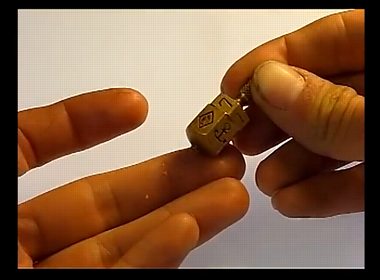
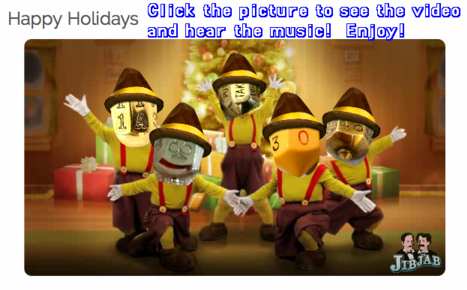
YouTube video of a Crown and
Anchor bi-level spinner! Savvas Papasavva
( miscpro at http://www.miscpro.com ) made
this YouTube
video about
the spinner on the left, and linked it
to my web page.
|
|
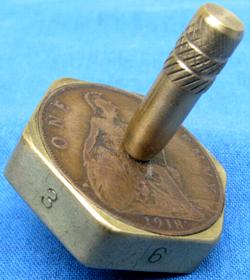
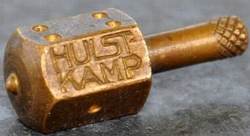
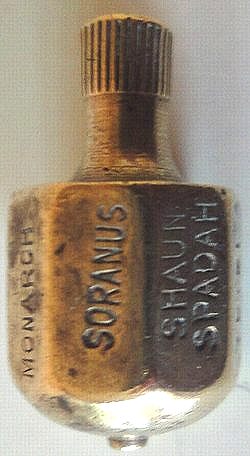
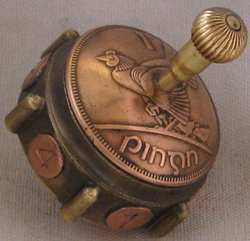
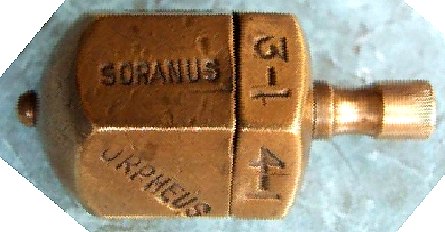
Horse-racing, British.
British,
saw on eBay
August 2011. Measures
1.5" long.
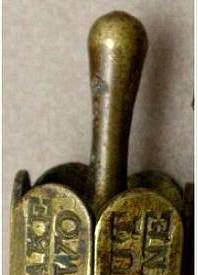
SORANUS - ORPHEUS - TISHY - ALAN BECK - LEIGHTON
- YUTOI.
All of these are champion English horses which raced
from about 1918 to
1922.
|
|
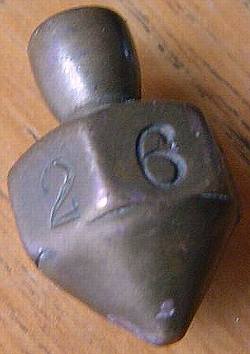
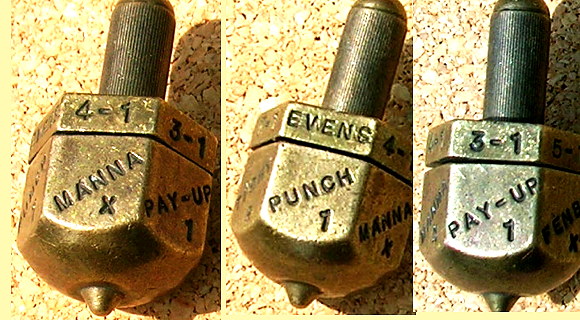
Horseracing, British. Brass. 35 mm, 303 grams.
top level: moving odds of 3-1, 5-1, 2-1, 7-1,
EVENS, and 4-1.
bottom level: PUNCH 1, MANNA X, FEMBO X,TRIGO 1, TISHY 2 and finally
PAY -UP 1. (note: the 1, X and 2 are for betting on home and away games.)
|
|
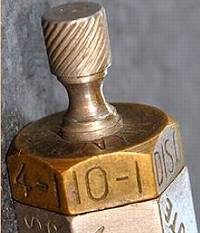
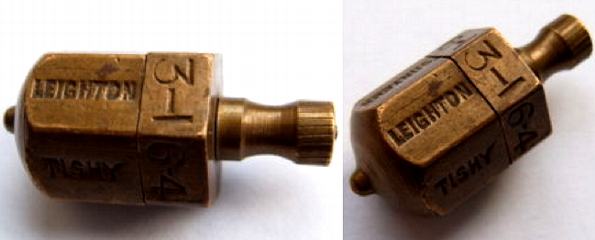
Horse-racing,
British Simlar to the above one, but different.
I own this one, �28.50 plus postage.
100% brass, 1-1/8 inch, 21 grams.
top section spins with odds,
in order--10-1 4-1 6-1 3-1 6-4 2-1.
lower section 6 names,in this
order-------alan breck, orpheus, yutoi, soranus
leighton, tishy.
|
|
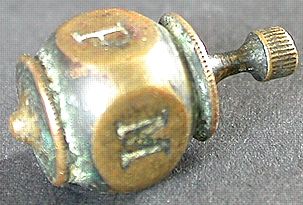
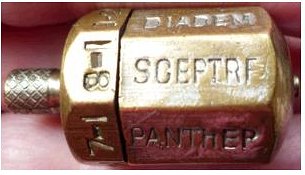
Race Horses, British.
Names of major U.K. Flat Winners on the sides of
the top. "Also
known as "The Sport of Kings," and
often linked with gambling, flat racing
has been a popular sport for hundreds
of years. It has become a lucrative financial activity
with horses wining millions of dollars
in a race, and millions more as a stud", per an owner of the top.
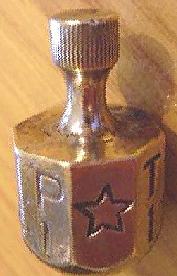
The 8-sided spinning top is 46
grams, c. 1-1/2 inch (3.5 cm) and
has the names
on it in this order: SUNSTAR (1911),
CINNA (1920), DIADEM (1917), PANTHER (1919), MINORU
(1909), SCEPTRE
(1902), LADAS (1894),
JEST (1913).
On the upper level, in this order: 2-1, 5-2, 5-1, 9-2,
7-2, 3-1, 8-1, 7-1 odds. I added the year of
their most
famous victory in parentheses, from
this source.
|
|
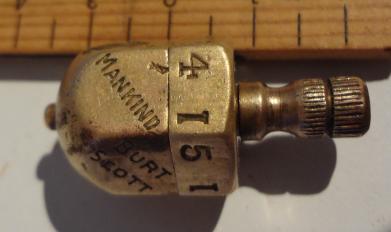
Race
Horses, New Zealand. The horses named on the
top were racing in New Zealand about 1944. Brass, length
35 mm, weight 35 grams.
Horse names lower section: MARGIN,
MANKIND, BURT SCOTT, GOLD BAR, INTEGRITY, RON LOGAN
Numbers (odds) upper section: 2
1, 7 1, 4 1, 5 1, 10 1, NoDIV
|
|
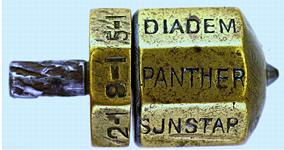
Horse-racing. Similar
to above. For
one thing, the order of the sides is different.
From Gerrit V.
This spinner and the one above are both "left-handed."
spectre, jest, cina, diadem, panther, sunstar, ladas,
minoru.
|
|
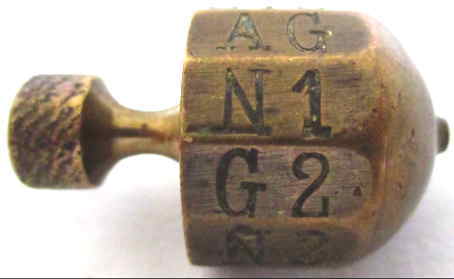
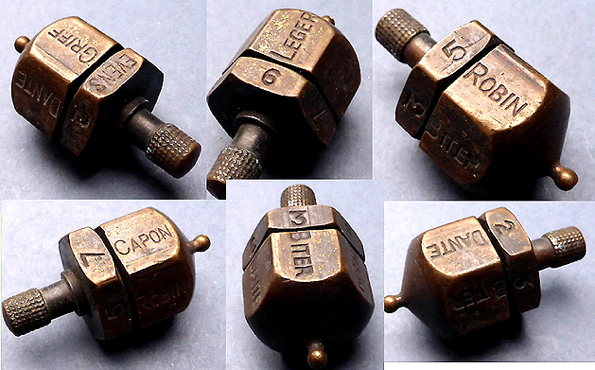
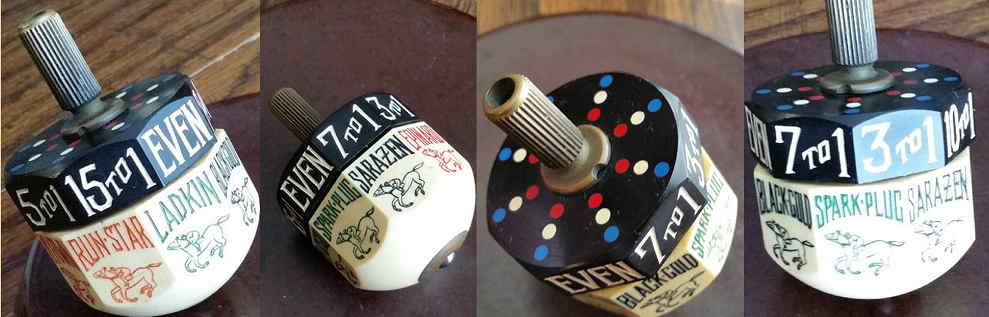
Horse-racing per Argentine seller.
He says, "ANTIQUE BRASS HORSE
RACING 2 PARTS SPIN INDEPENDENTLY
6 SIDED PUT TAKE SPINNER. TOP READS 7, 9, EVENS,
2, 3 AND 5. BOTTOM READS GRIFF, LEGER, CAPON, ROBIN,
BITER & DANTE. IT MEASURES 1.75 INCHES LONG AND
0.80 INCHES WIDEST. ORIGINAL PATINA, WEIGHT: 43 GRAMS."
Jan 2018 on eBay, went for $149.89!
|
|
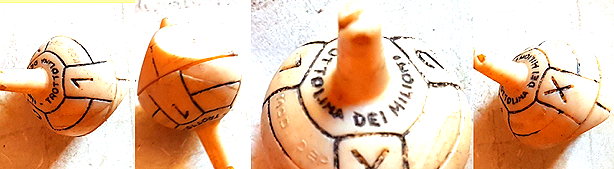
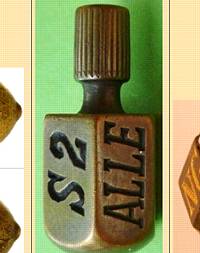
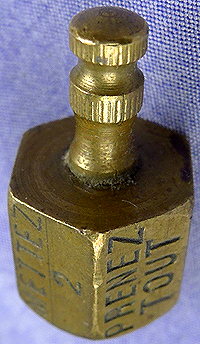
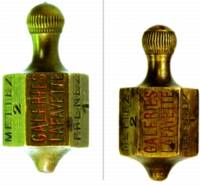
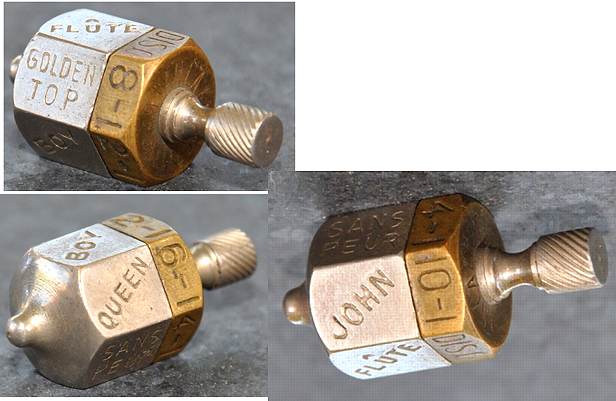
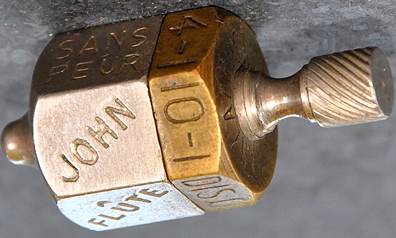
French language. Sans
peur
= "fearless." Seller says:
"Rare spinner/dice. Made by van Laere
in Brussels. Belgium. Engraved on the top of the
spinner near the handles, it says
"VANLAERE.BRUXELLES."
Measures about 3,5 cm high." I measured mine as 31
grams,
and 1-3/8."
Click
here
for a picture of all six sides. The
six sides are: Sans Peur, John, Flute,
Golden Top, Boy, Queen.
I have no idea what the six names represent -- thoroughbred
horses, sports teams, pigeons,
etc.?
|
|
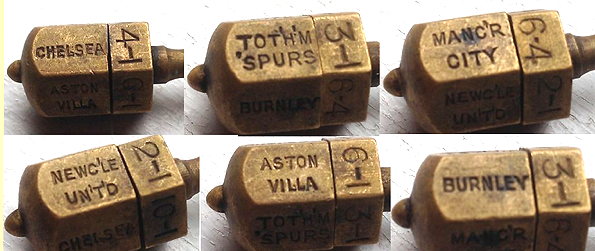
Football teams
(British)
bi-level
top. First
time I saw this, on eBay
Feb. 2008. .... I bought one in July 2017 for $130 + posstage: 22 grams, 1-1/8 inch, hardly spins.
ASTON VILLA - CHELSEA - TOTTENHAM HOTSPURS - MANCESTER
CITY -
BURNLEY - NEWCASTLE UNITED
These teams are English Football (Soccer) League
Ch�s for a long stretch of time -- 19th century
till recently. List of champions
here.
�Football / soccer teams. The teams named were all cup
winners/finalists in the 1920s/30s, so I guess it dates from that era�.
|
|
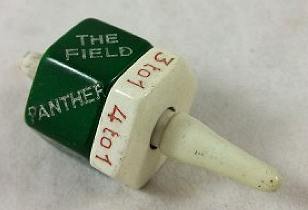
Plastic, prob. from United Kingdom.
top 6 sides: 2 to 1, 3
to 1, 4 to 1, 5 to 1, DISQ,
EVENS.
bottom 6 sides: THE FIELD,
PANTHER, BLUE
FLASH, WHITE
LADY, GOLDEN
EAGLE, RED KNIGHT.
Made of celluloid or similar
early
plastic. ... ...
.... .
Height 1,5/8" or 47mm,
diameter 7/8" or 23mm. 10 grams. Spins well enough, but poorly.
|
|
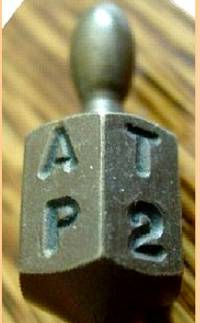
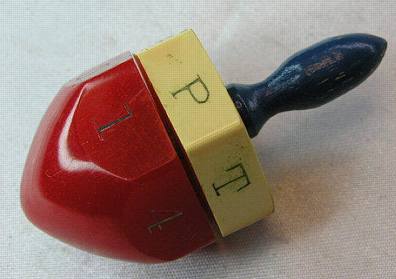
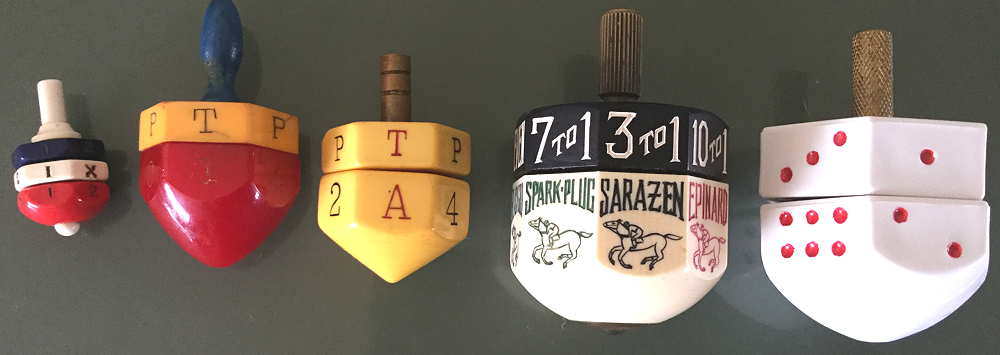
Per seller:
Vintage Bakelite
Top ... ..... The white and red parts are
bakelite - The
spin seperately
from each other so the
final outcome is always
random - The blue handle
is wood with some wear
to the paint - The markings
on the white part are P and
T and on the red you have 0 1 4 A 2 3
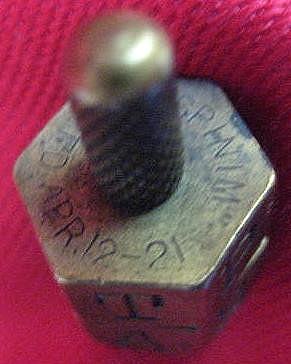
"It is marked "Spinim" on top
with a patent
number.
The patent
number is U.S. PATENT
#1374243,
and the patent can be seen by
clicking
here. Once on
that web page, you will see
links for a drawing of the devise,
abstract, description,
claims, etc. The patent
was made to cover all tops that
were bi-level -- two separate rotating
parts.
"1" wide x 2 1/4" tall."
Went for $38. I own this top, by the
way. It
is also in about the
5th picture on this page,
along with other bakelite
tops.
|
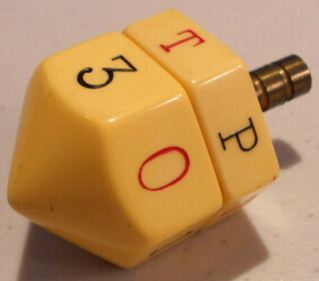
|
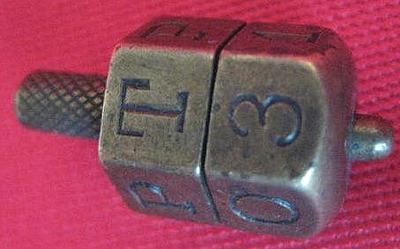
Bakelite. Beautiful
picture, looks good enough to take a bite out of. Went
for about $46 plus postage on eBay,
Oct. 2012.
|
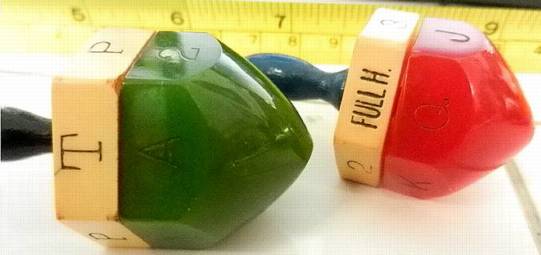
|
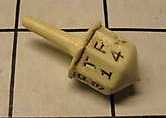
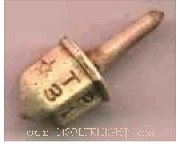
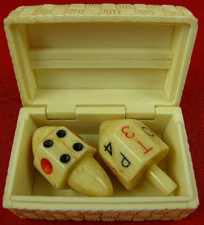
Bakelite. I bought these two
on eBay June 2013, $105 total delivered. This
is the first bakelite bi-level POKER top I have ever
seen. The coloring on the Put and Take top is
unusual.
Dealer said, "2 RARE VINTAGE GAMING GAMBLING BAKELITE
PUT & TAKE CARD GAME SPINNERS. BOTH ARE 2
1/4" TALL TO TOP OF WOOD HANDLES X 1 1/16" WIDE.
ONE IS RED AND CREAM BAKELITE AND ONE IS GREEN AND CREAM
BAKELITE. BOTH EXCELLENT CONDITION."
Both of them have "SPINIM" brand name on the top near
the handle, and patent number 1374243.
Both are about 2-1/4" long and 20 grams.
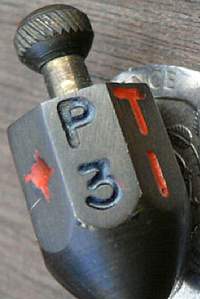
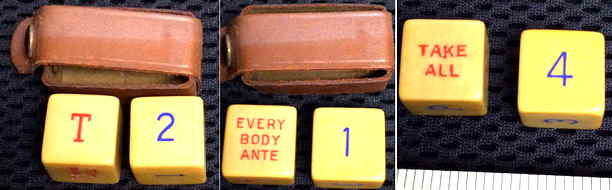
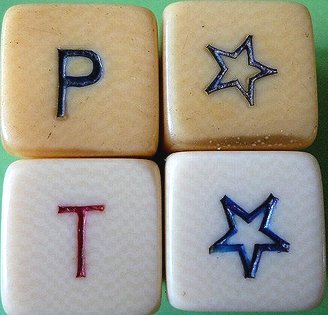
The Put & Take one has Ts and Ps on the upper level
and on the lower level: 0 1 4 A 2 3.
The Poker one has on the upper level: FULLH, 3, STRT,
4, FLUSH, 2; and on lower level: A K Q J
10 9. So possible hands could be: Full House,
Jack high; 4 of a kind in Jacks, or Straight, Queen
high.
|
|
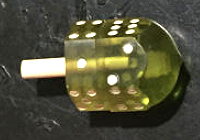
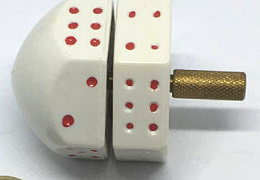
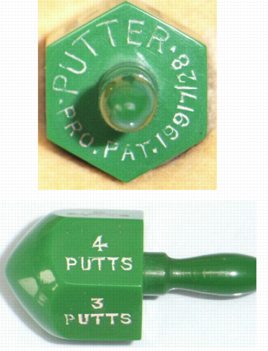
Plastic. Seller said: "Vintage Green Put & Take Teetotum Bi-Level Spinning Top Gambling Dice.6 sides, plastic.Approx 1."Bi-level.Both levels read1 thru 6 forming a pair of dice. |
|
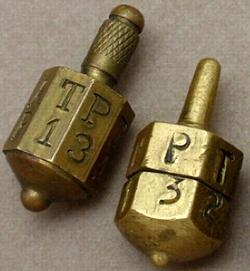
Standard Put & Take bi-level
top on right.
|
|
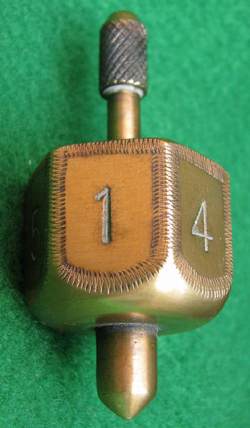
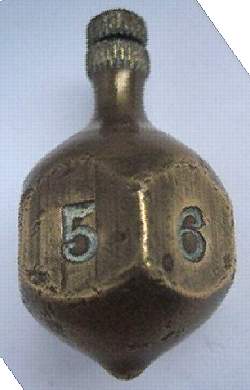
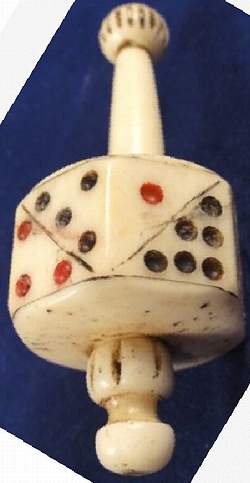
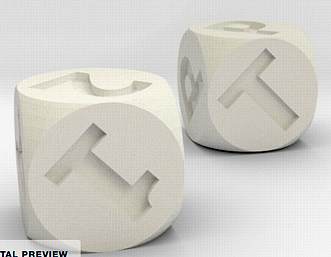
Plastic, dice theme. I finally got this from a seller in the Netherlands. About 2-1/2 inches, 46 grams. Spins poorly.
|
|
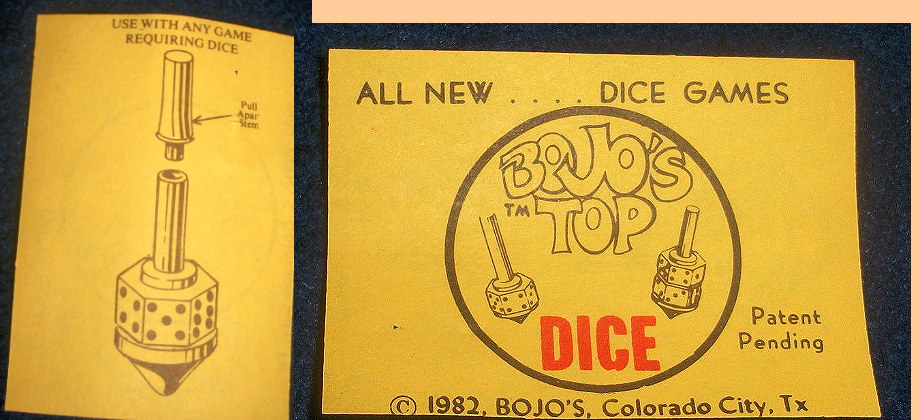
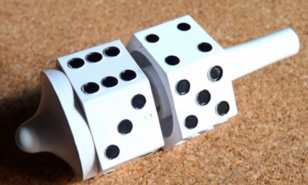
Plastic, Dice theme, long. 6.5 cm!
It looks nice, but is a TERRIBLE spinner -- it simply
hardly ever can be gotten to spin! Mine came recently
in a plastic box with a paper inside that said, "BOJO's
TOP," copyright 1982, Bojo's, Colorado City, Tx."
Click here to see the paperwork that comes with this top.
|
|
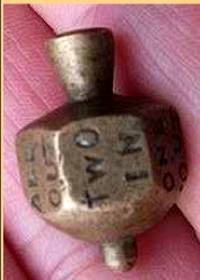
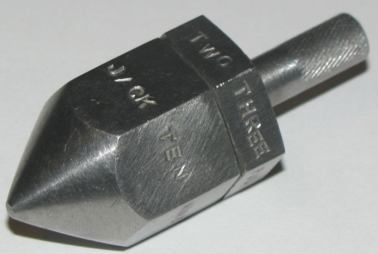
Bi-level Poker top, made of steel
(magnetic). Got this August 2013
from A Pennsylvania USA seller on eBay. A heavy 76
grams, and 2-1/16" long.
� top level sides, in order: Two, Three, Four, Full,
Strait, Flush.
� bottom level, in order: nine, ace, king, queen,
jack, ten.
Looks nice, spins very poorly.
|
|
Manufacturing error -- odds level
reversed. I bought this for $18 on eBay. Notice how the top
(odds level) is up-side-down. I soaked it in WD-40, but still
could not unscrew it to correct it. Probably worth more the way it is!
|
|
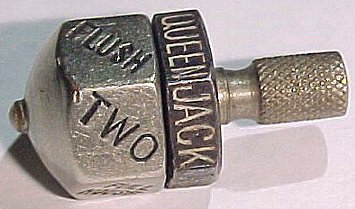
Bi-level poker top! I
had never seen
this
before till
February 2009 when it
went for $225
on eBay. The
seller described it as:
"Bi-level poker top ...
1-3/8 inch tall by 3/4" wide, 31 grams ...
..The top level
spins independently
from the
bottom. [Hooray! I finally
got a nice one on
eBay for somewhat less in
March 2011. Just goes
to show that prices fluctuate,
so you can wait for the right
price (sometimes).]
"The top level reads TEN,
NINE, ACE, KING,
QUEEN, and JACK. The
bottom half reads STRAI'T,
FOUR, FLUSH, TWO, FULL HOUSE, and THREE."
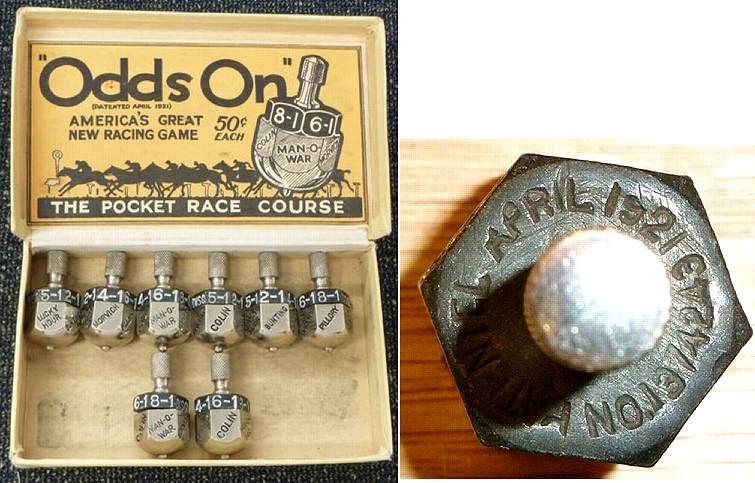
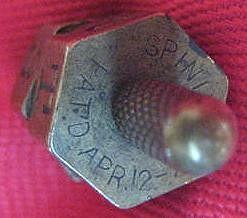
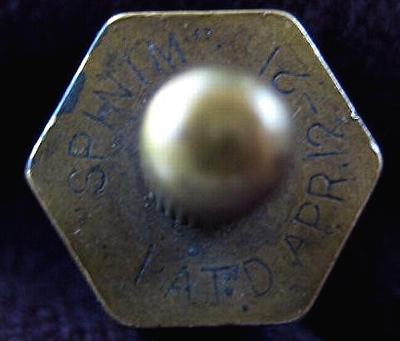
The patent number and date
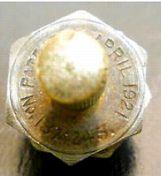
on my personal top is very clear: "Patented April 1921 No. 1374243." It
must be a U.S. patent because the
first and last U.S. patent number for 1921
are 1,364,063 and 1,401,947. ... I have finally deduced
how the game was played. I don't think
there was a layout, and I don't think one played
against the "house." Rather, like with poker
dice, each player would spin his own "hand," and the
highest hand would win. For example, the one
pictured here shows a queen-high flush. If it had landed Jack Two, it would be a pair of Jacks.
|
|
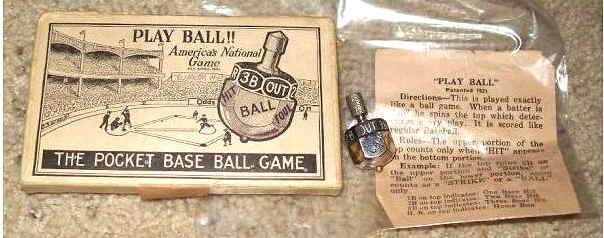
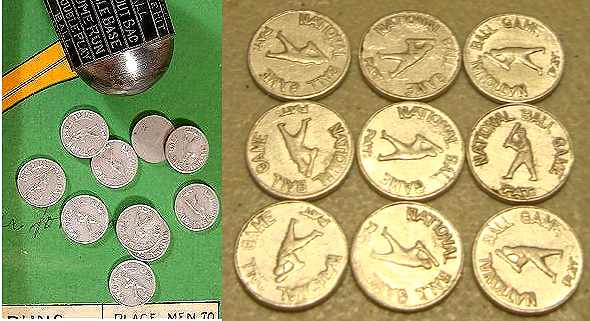
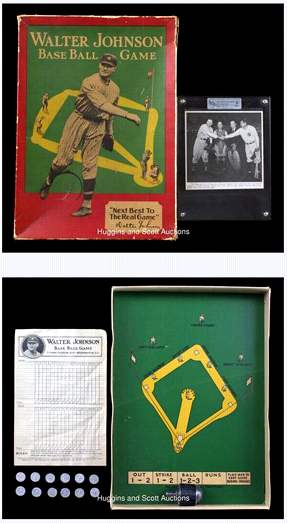
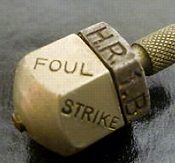
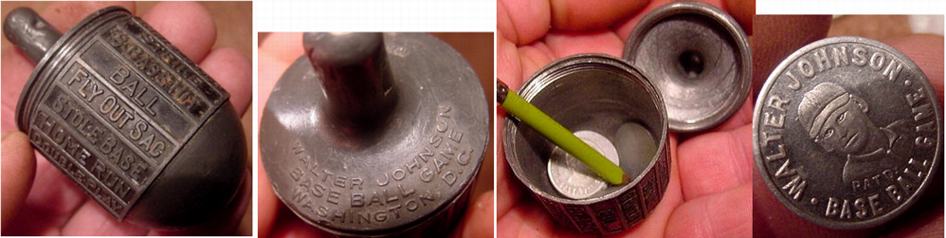
Baseball bi-level
top.
Dealer
said, "Bottom
die reads: "Ball, Hit, Ball,
Strike, Foul, Strike"
Top die reads: "H.R.,
1.B.,
2.B.,
OUT, 3.B., OUT"...
...
Measures
approx 1 1/4"
L .. ... Marked: "PATENTED
APRIL 1921 No. 1374243"
(same
US patent number as the Poker top, in the row above). ..
... Apparently the spinner was used to help simulate a baseball game -- no odds, no gambling use.
I won it in Oct 2010 for
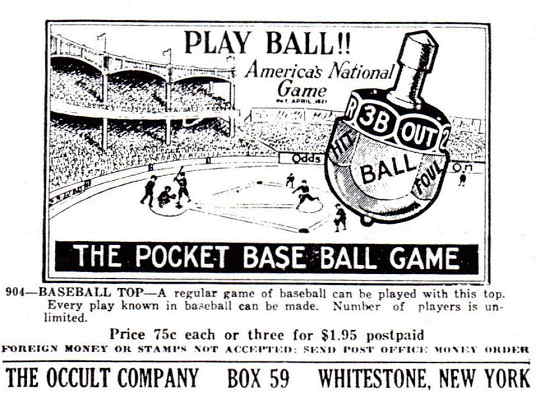
$62 delivered. Click here for an ad for a similar baseball top, also 1921. Also click here for a view of the box and instruction sheet.
|
|
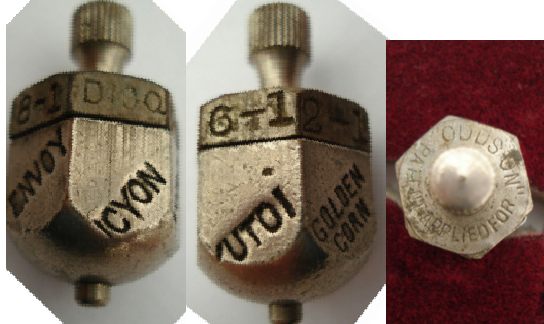
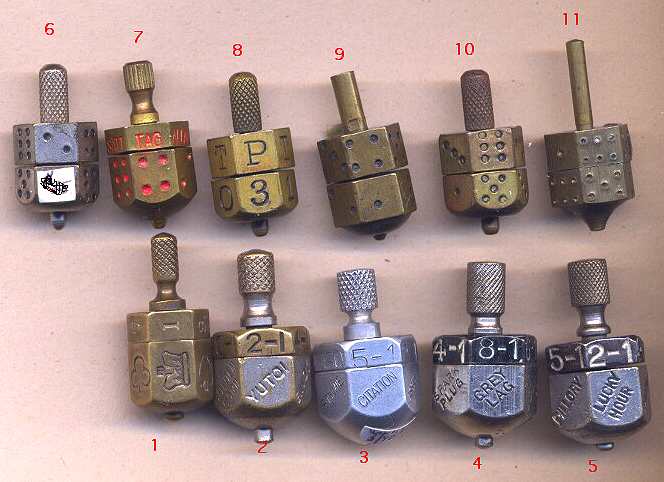
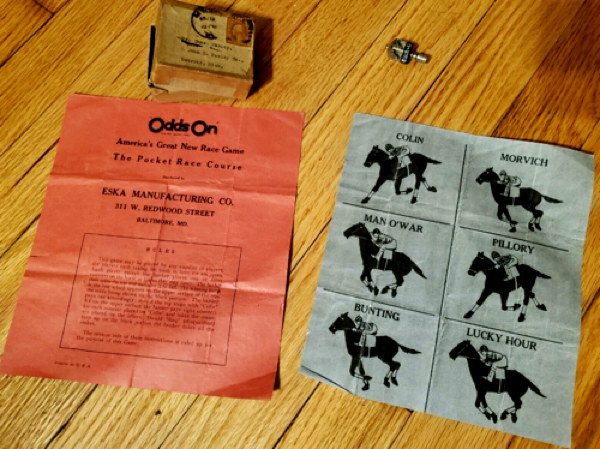
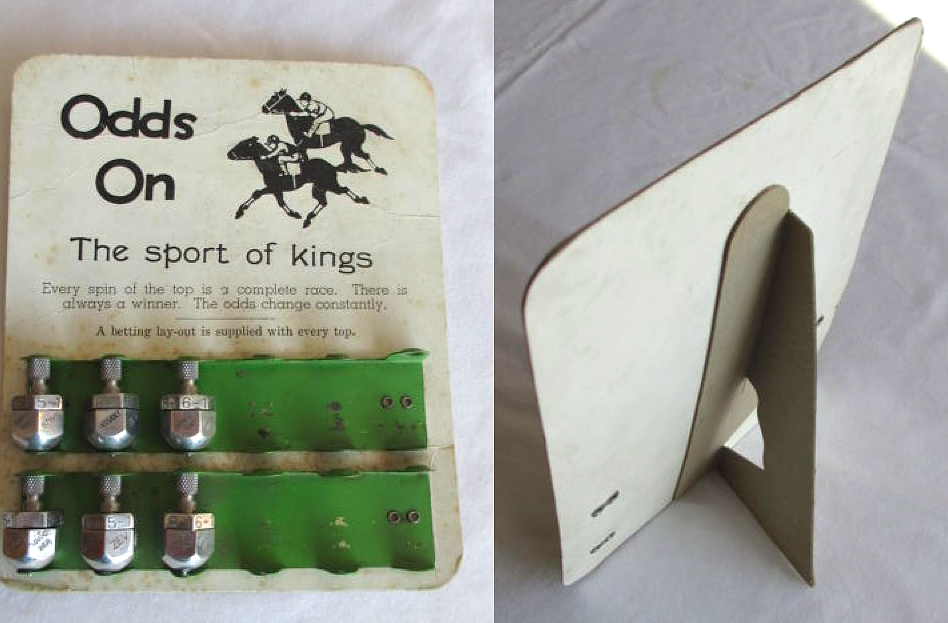
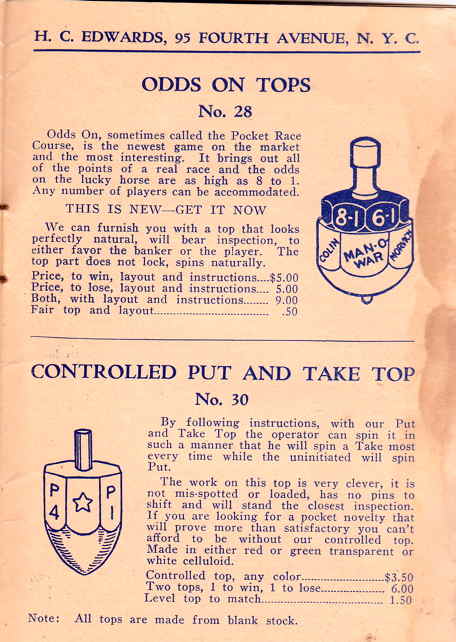
Horse racing -- misstrikes.
Top of spinner says "ODDS ON, patent applied
for."
|
|
Another
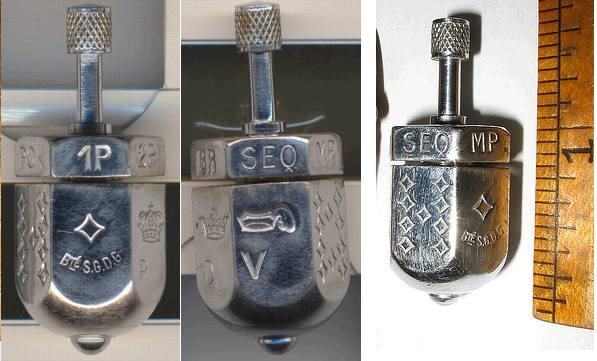
bi-level poker top, from France.
"Top level in this order: SEQ, MP, POK,
1P, 2P, BR
"Bottom level:
� 9 diamonds
� 1 diamond BTE (TE is underlined)
followed by S.G.D.G -- 1= Ace - Ace
� A kings crown with an "R" under
it -- R= Roi - King
� A queen's crown with a "D" under
it - D= Dame - Queen
� Another type of hat with a "V"
under it - V= Valet
- Jack
� 10 diamonds"
Note that it is over 1-1/2" tall. ""Bte
S.G.D.G."
is an abbreviation
for a typical phrase concerning
products from France. "Bte" is
short for "brevet�" (="patented").
and " S.G.D.G." stands for "Sans Garantie Du Gouvernement" (="without
government guarantee").
Credit: from a post October 19, 2005
at this Flickr
Yahoo site.
I think it is played like the poker bi-level
top above. Here perhaps, the top level refers to classes
of poker hands, like: SEQ [a straight?, a sequence], MP [Full
House? MP= maison plein =maison pleine = full house], POK [?],
1P [one pair?], 2P [two pair?],
BR [?]. .. ..... So, for example, if "1P" and an
"R" appeared, it would mean a pair of kings!
|
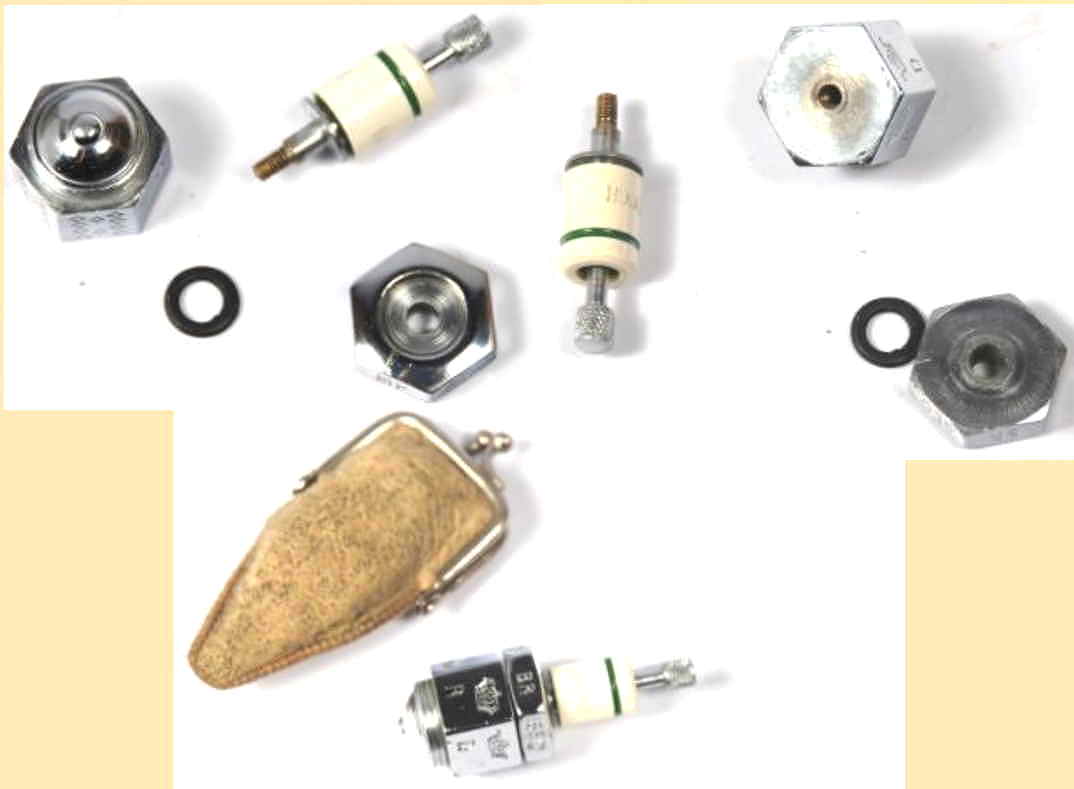
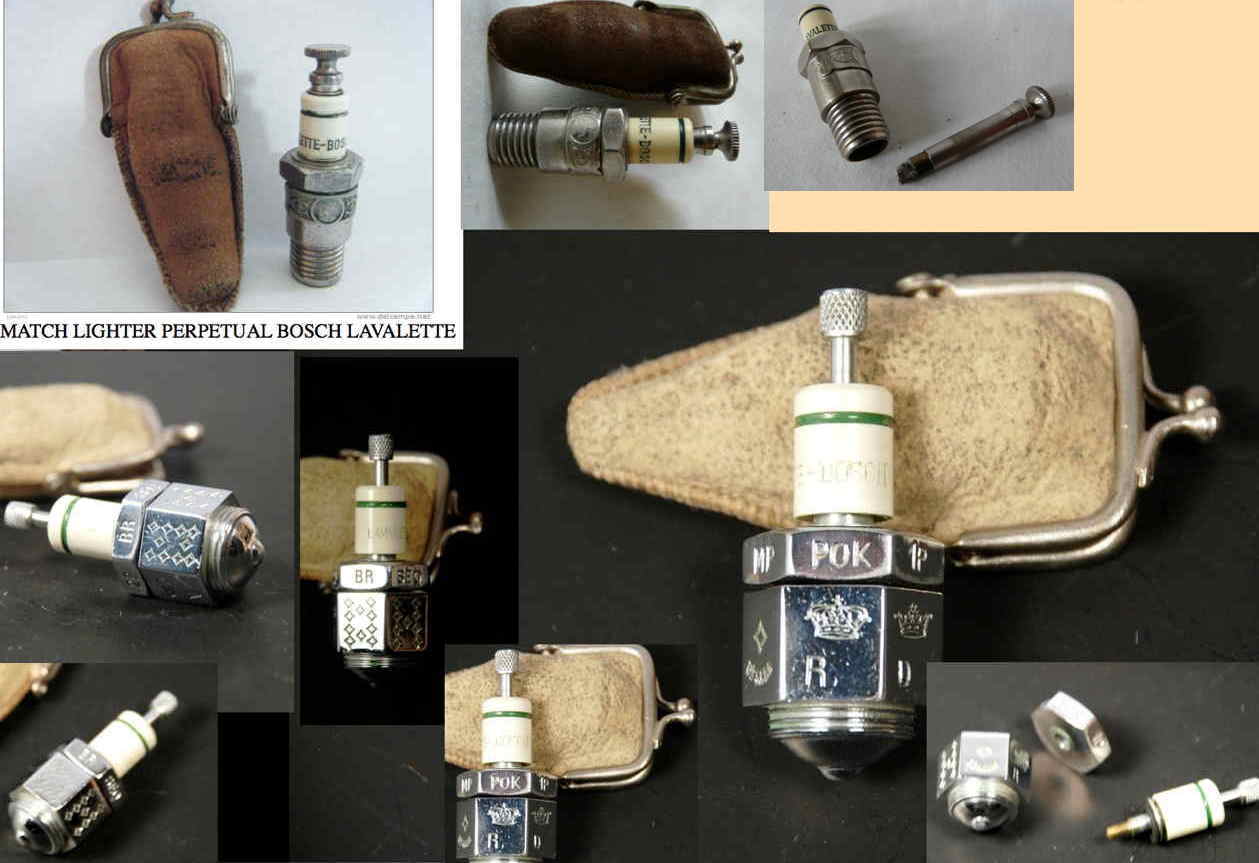
|
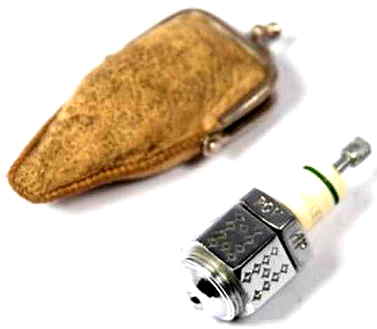
Similar to the one above.
Looks like a spark plug. Owner lives in Germany. He
describes it as "in the form of a Bosch (Bosch-Lavalette) spark plug.
As far as I could determine, originally from France and probably for the game Pinochle.
Made probably in the 1930/40 ies."
I own this one. It is 2" long, 50 grams. It spins quite well
virtually each time if you are careful. One issue I have is that
if you tighten the handle (as you normally would), the upper level
presses against the lower level, so the upper level won't move
independently.
More pictures here. And here, which shows the company's lighter in the three upper pictures, and the other pictures
are of the bi-level Put & Take made from some of the same
parts. I own that Put & Take. (Bosch-Lavalette was an
old German-French partnership firm which made a wide variety of
light engineering precision work, largely connected with fuel injection
pumps and small electrical equipment, and large petrol engines.
Lavalette, a French firm, and Bosch, a German firm, partnered between WW
I and WW II.)
|
|
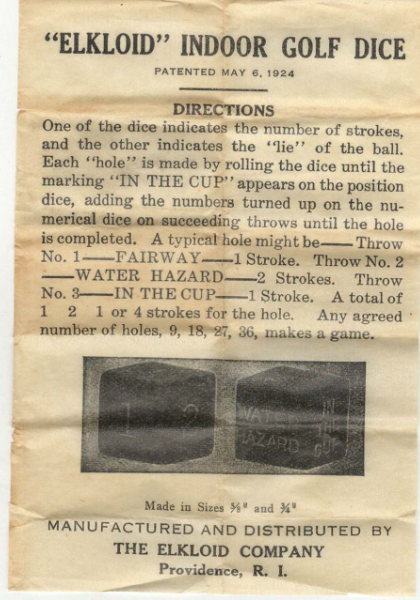
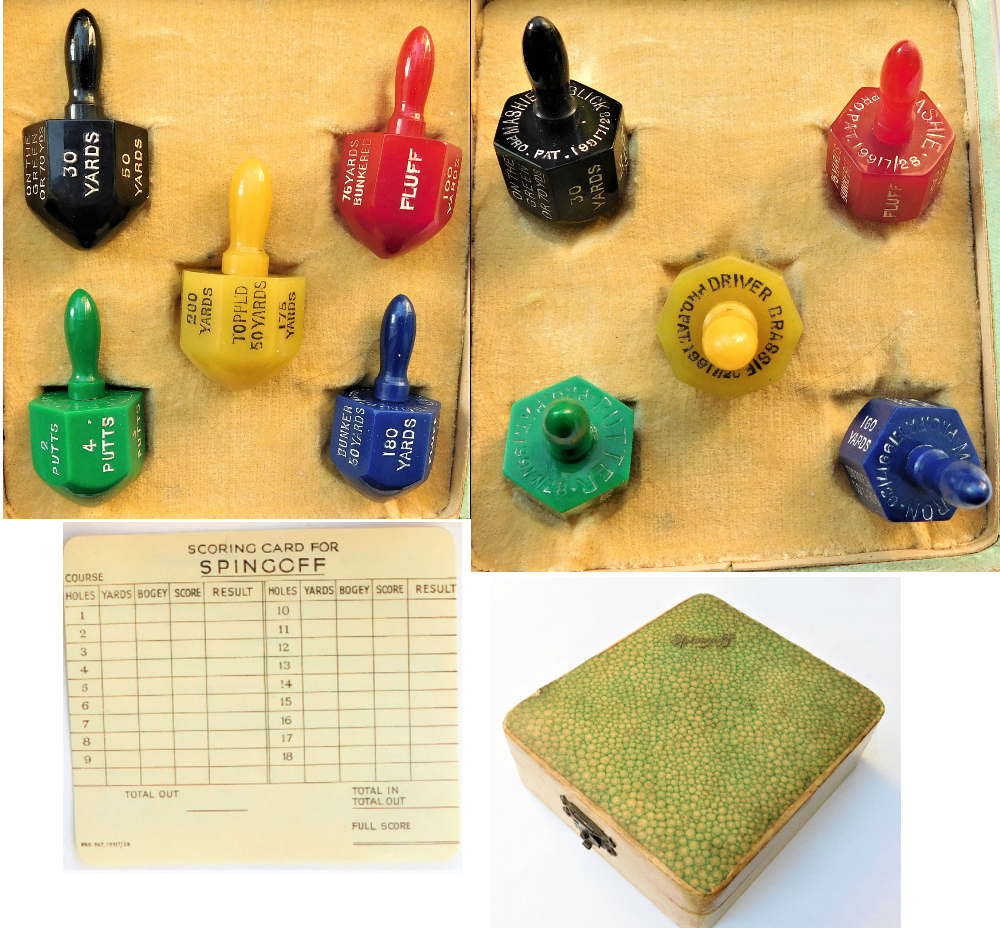
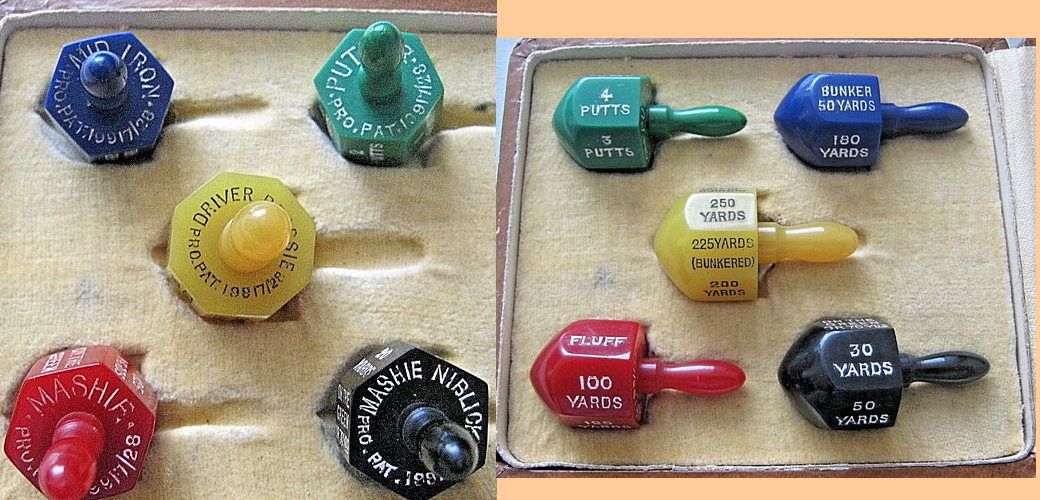
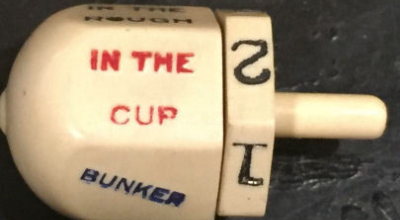
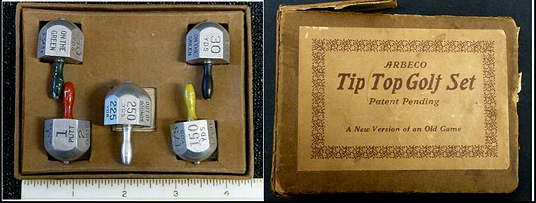
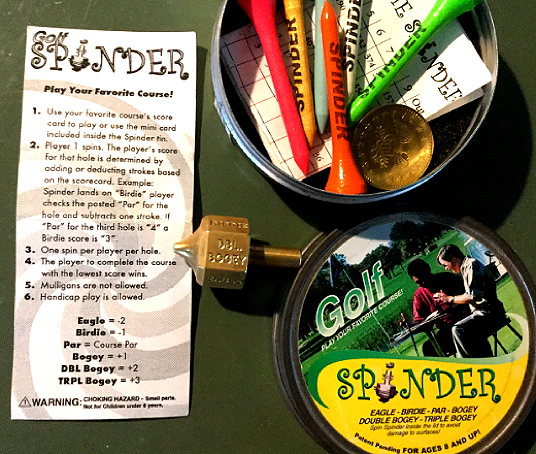
Golf. Seller says, "Vintage Ivory Color Put & Take Teetotum Bi-Level Spinning Top Gambling Game.6 sides, plasticApprox 1"Bi-levelTop
level reads; 1,1,2,1,1, 2 Bottom level reads; In the Cup, Fairway, In
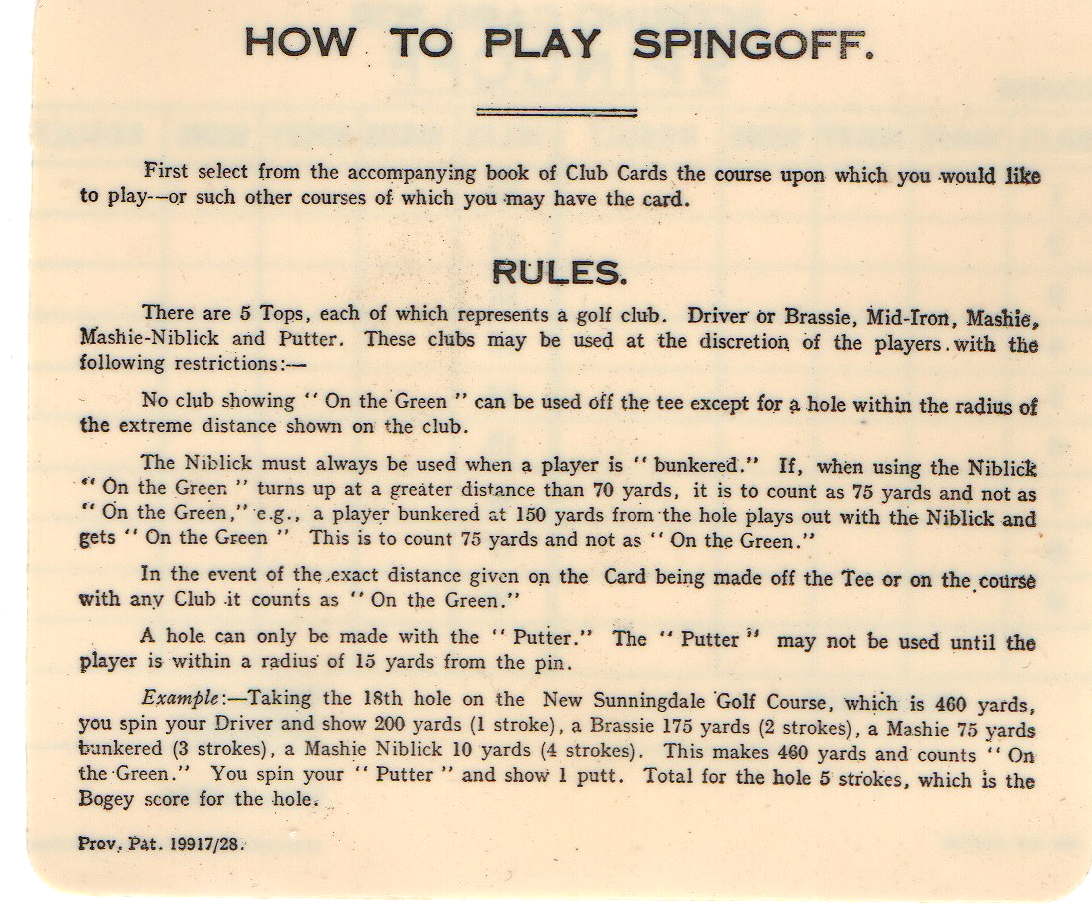
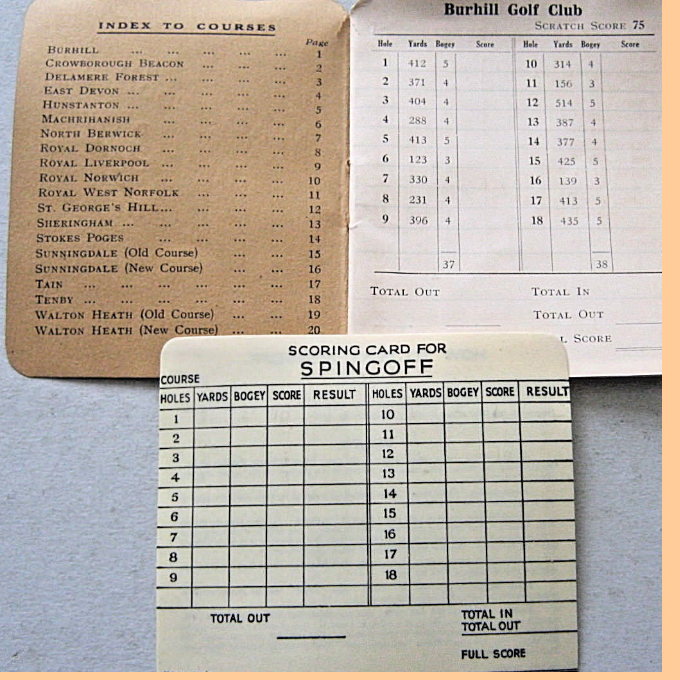
the Rough, In the Cup, Bunker, Water Hazard. Instructions here.
|
|
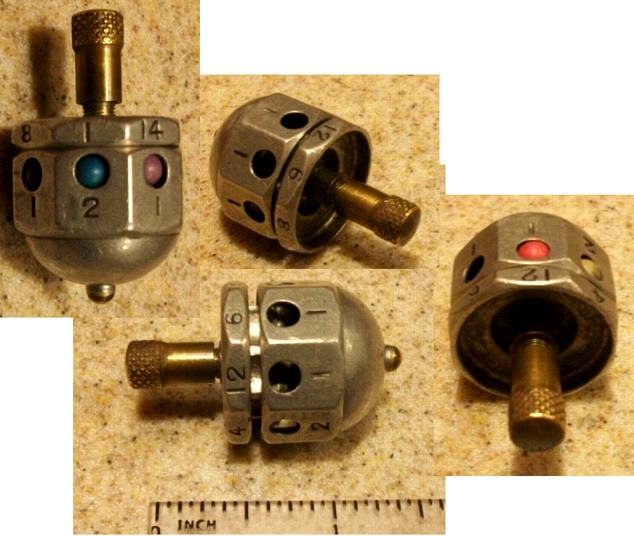
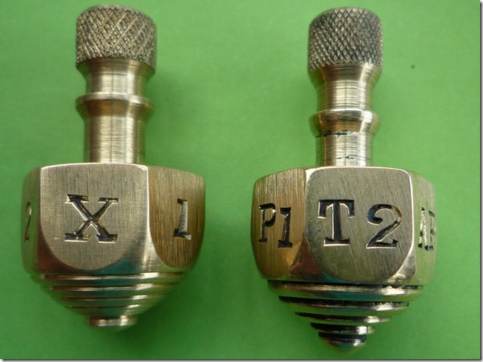
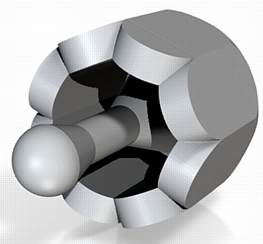
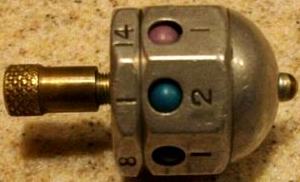
Unusual bi-level top with 8 colored
balls. Click
here for full
information and pictures on another page.
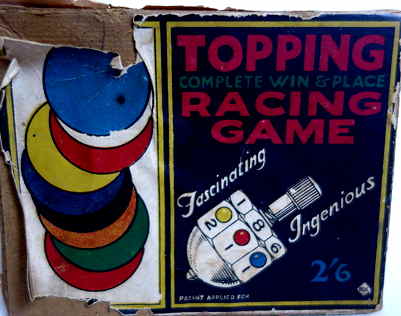
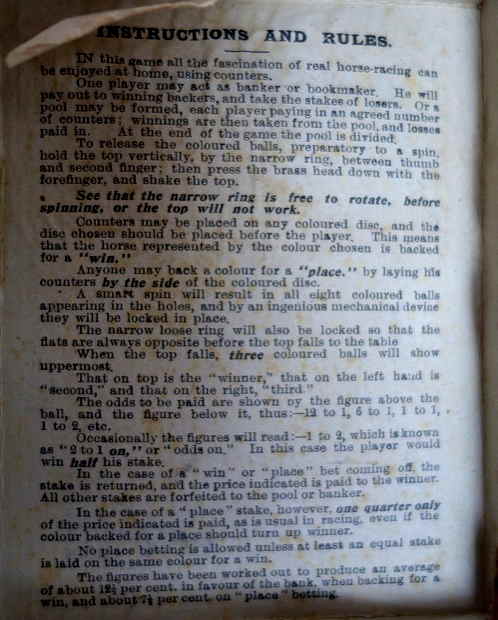
More pictures of this top here -- shows the bi-levels more clearly. Click here for a picture of the original colorful box and the instructions. In January 2015, it (spinner, instructions, box) went for 221 euros on eBay.
|
|
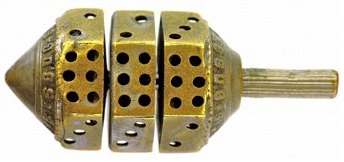
Tri-level! French.
On
both sides is engraved : G.Jaquemet
Paris Bte S.G.D.G.
Top of Gerrit Veldhoen, Netherlands.
|
|
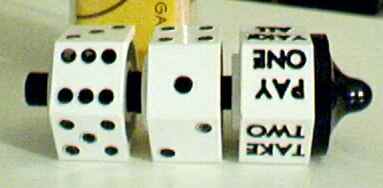
Another tri-level
of sorts. This picture was emailed
to me January
2007. The sender said, "
It's from 1982 and was
made by a company called
BOJO's. ... ..... ..... The
top breaks down and you can move the
tumblers off and
on, depending on what you are playing."
|
|
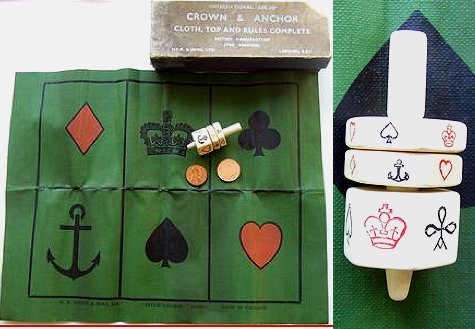
Tri-level Crown & Anchor.
Dealer in UK says, "AN ORIGINAL CROWN AND ANCHOR
GAME. HAS A GREEN CLOTH BOARD WITH
MAKERS NAME ON BOTTOM. JUST OVER 11 INCHES
BY 9 INCHES. J.GIBSON & SONS "INTERNATIONAL
SERIES" MADE IN ENGLAND. THE DICE (top) IS OF
A COMPOSITE MATERIAL (probably plastic). BLUE
OLD CARDBOARD BOX IS ORIGINAL ALSO."
It went for $183.50 plus postage, April 2012.
|
|
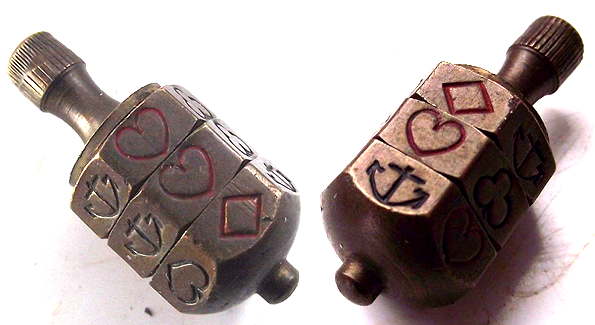
Tri-level Crown & Anchor.
While the usual Crown and Anchor game consists of three dice, each
of which has a crown, anchor, heart, spade, diamond and club on each of
the six sides, this Crown & Anchor spinner has three levels, each
of which has those same six sides.
It went for $283 on eBay, December 2016.
|
|
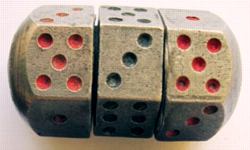
Tri-level Dice. I found
this image on page
of Justin Michell here . You
would roll the device, not spin
it.
Maxim has similar ones at the bottom of his web page.
|
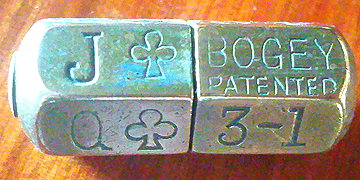 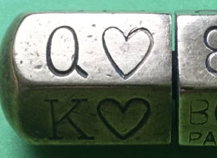 |
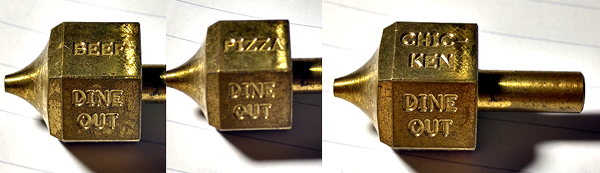
Bi-level rolling log. What game is this from?
Left end: J Club, Q Club, K Club, J Heart, Q Heart, K Heart. .... Right
end: Bogey Patented, 2-1, 3-1, 4-1, 6-1, 8-1. .... 3.5 cm long, 34
grams.
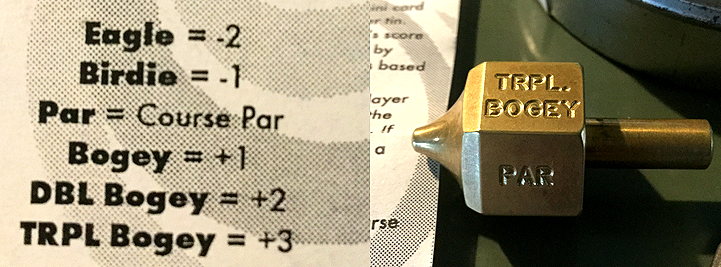
"Bogey" means one above par in golf lingo. It generally means
error/mistake/loss. ..... Or it could refer to Bogey motorcycles
which were made in the 1920s, thus maybe an advertising item? ... Here,
the side could be for: E (for Even -- 1:1)/disqualified?
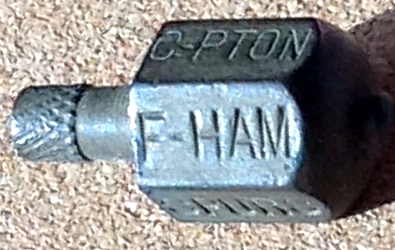
|
|
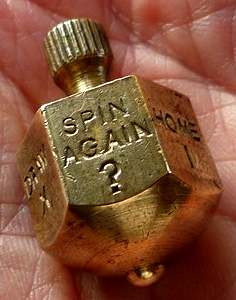
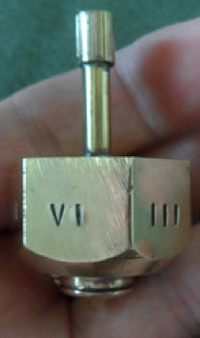
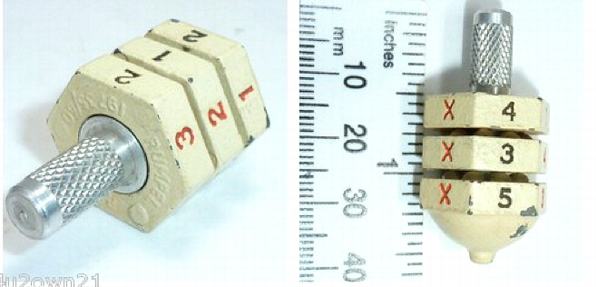
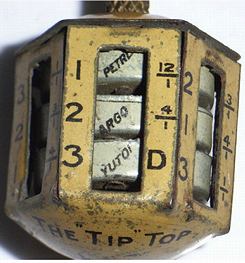
Tri-Level. UK dealer
was asking $119 plus postage. Has patent information
on it. Per dealer: "Length
approx 4 cm ....
This piece is in all original pre-owned condition
age related wear and marks. ....there are chips to
the paintwork in places."
The top is 6-sided, each level has these 6 sides:
X 1 2 3 4 5.
Some numbers are in red, others in black.
|
|
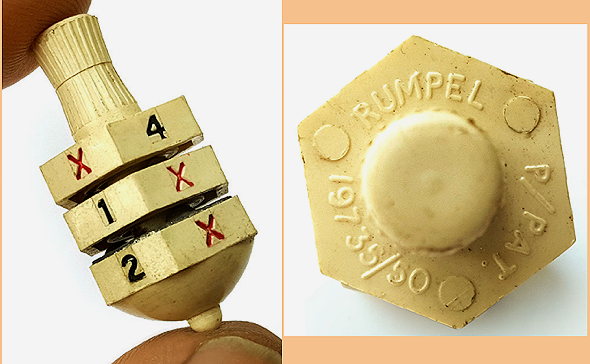
Tri-level. Seller says: "STILL
IN GOOD WORKING PERIOD CONDITION, THIS PARTICULAR TEETOTEM IS RARE
BECAUSE IT IS TRI-LEVEL WITH 3 INDEPENDENTLY SPINNING DECKS OR LEVELS.
THE BOTTOM LEVEL IS FIXED TO THE MIDDLE SPINDLE, WHILE THE MIDDLE AND
TOP LAYERS ARE FREE FROM THE SPINDLE AND SPIN SEPARATELY AND AS YOU CAN
SEE THE TWO TOP LAYERS CAN BE SPUN SEPARATELY ON BALL BEARINGS.
IT IS MARKED ON THE TOP - RUMPLE P/PAT. 19735/50
APPROX TOTAL LENGTH - 3.8CM (38MM)." |
|
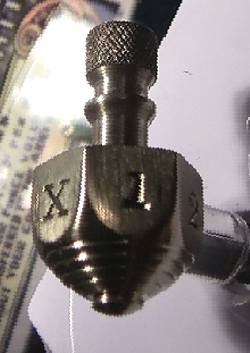
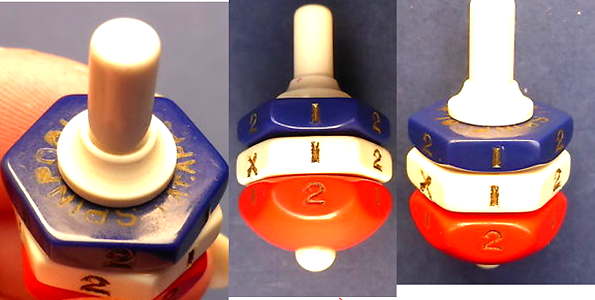
Tri-level. From UK. Per dealer: "The
top is marked "Spinpool Pat Appd For". I have been unable to track down
the makers or anything similar. The sides of the three hexagons are
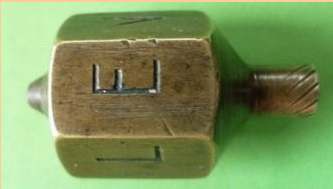
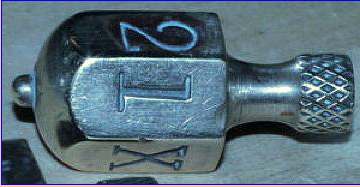
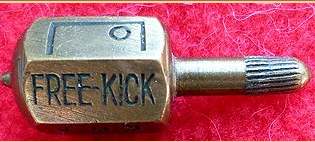
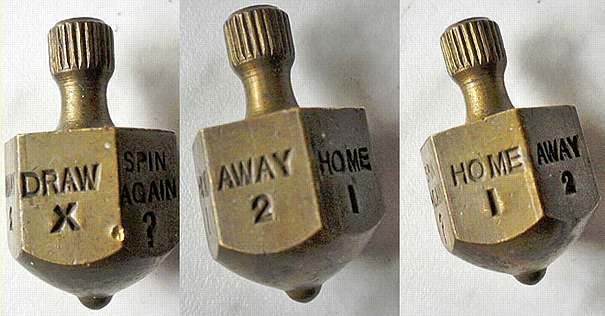
marked in gold with X, 1, 2, 1, 2, 1. Because the three discs spin
separately, the final outcome is always completely random. The teetotum
measures 3.5cm tall."
The spinner has to do with selecting and betting on sporting teams
-- whether home or away team wins or there is a draw.
... Went for $75 at auction January 2017. April 2017, it
went for almost $100 (plus shipping) on eBay. I came in
second. In March 2019, I finally bought one, for much less.
About 5 grams, 1-1/4."
|
|
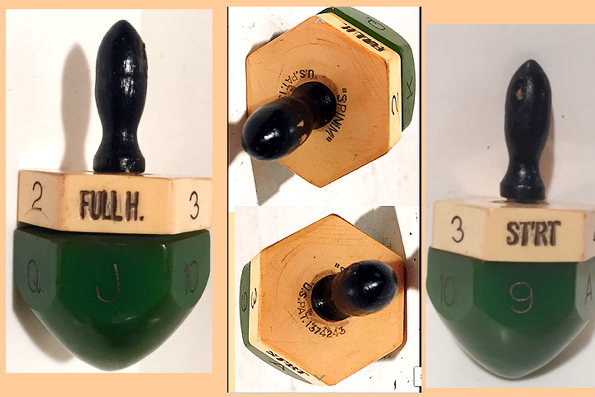
SPINIM POKER.
Per seller:
Vintage Catalin Gambling Spinner, Patent # 1374243.
Also referred to as Rotatable Dice, Teetotum, Put & Take, Patent # 1374243.Bakelite-Catalin,Approx 2-1/8"Bi-level etched on top of the top is "SPINIM" and US patent number 1374243. |
|
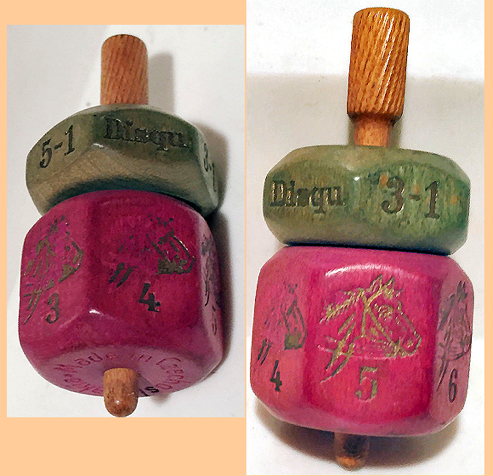
Wood Bi-level HORSERACING ODDS ROLLER
- Vintage Gambling WOOD BiLevel Spinner/Rotating Top - Teetotum . Spin
the top. When it stops the winning HORSE & ODDS paid are shown.
Includes the 1 in 6 possibility that the winner was "DISQUALIFED". 6
sided, hexagonal, wood (per seller).
Sept 2018, it went for $150 on eBay.
|
|
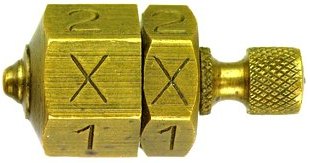
What game is this?
Probably from Portugal: see here.
Bottom level: X - 1 - 2 - X - 1
- 2, and on the top: X - 1
- 2 - X - 1 - 2
Top of Gerrit Veldhoen, Netherlands.
|
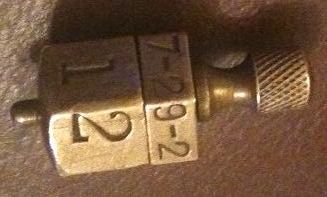
|
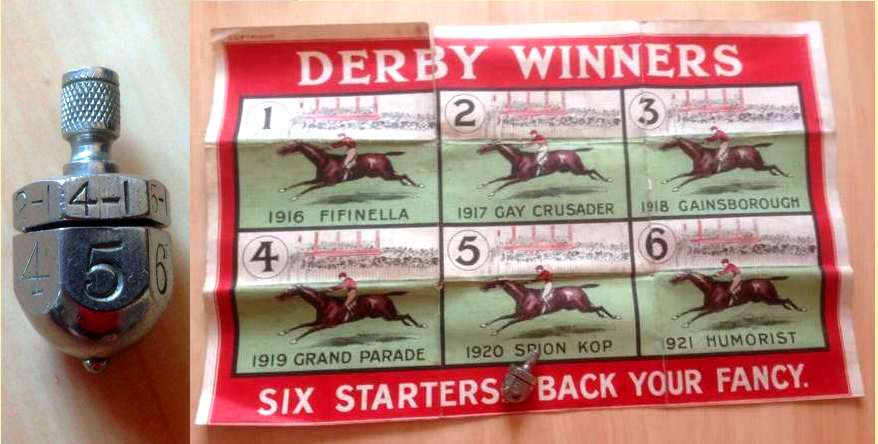
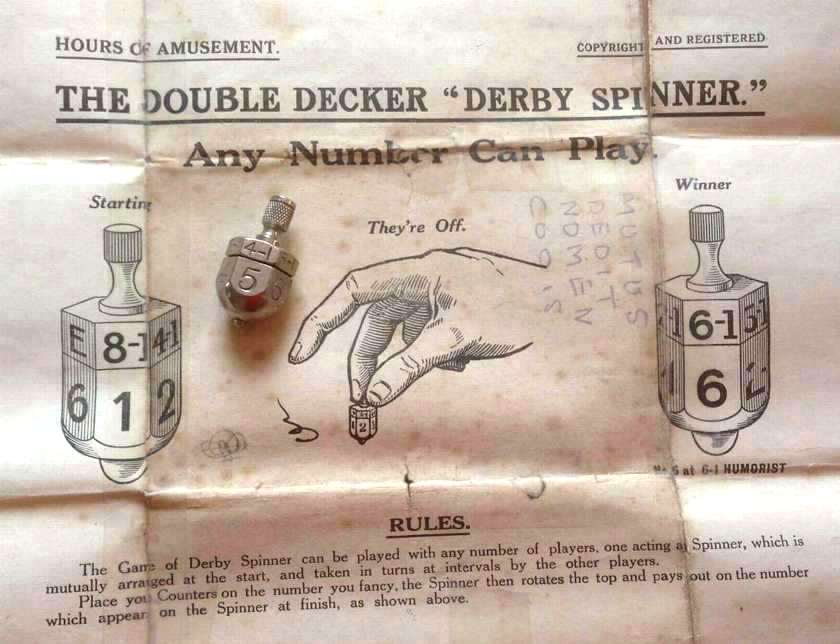
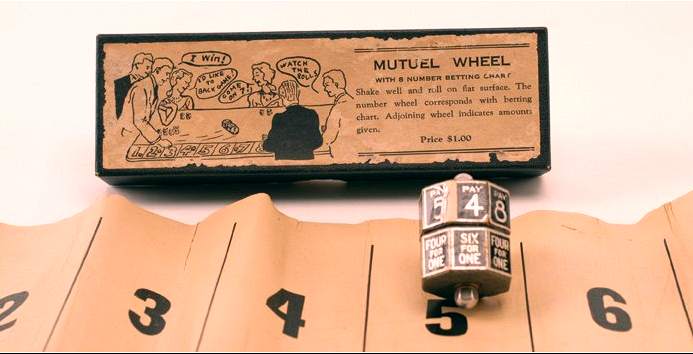
Bi-level
"Derby"top: the usual odds on top, but
numbers 1 to
6 on the bottom instead
of horse names or crown-anchor-spade-club-heart-duamond.
|
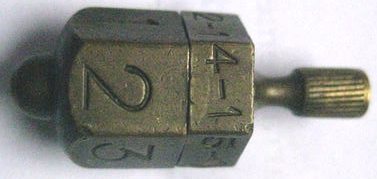 |
Another bi-level "Derby" top. |
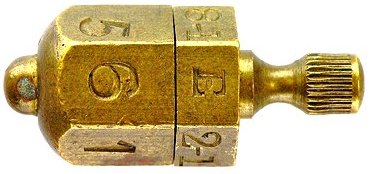
|
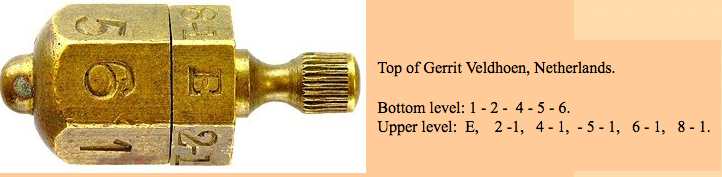
Another bi-level
"Derby" top with numbers.
Top of Gerrit Veldhoen, Netherlands.
Bottom level: 1 - 2 - 4 - 5 - 6.
Upper level: E, 2 -1, 4 - 1,
- 5 - 1, 6 - 1, 8 - 1.
|
|
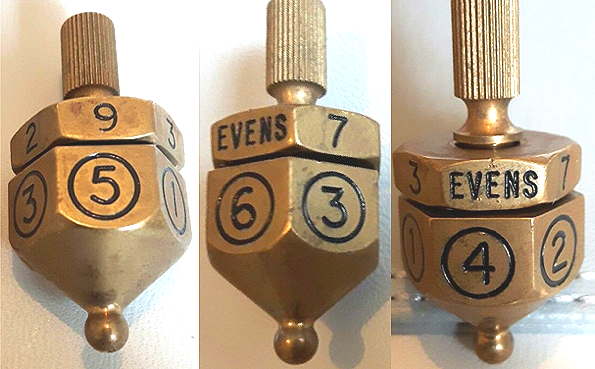
Another bi-level brass "Derby."
Very nice unusual top. I paid 59 pounds for this (plus postage) from the U.K -- $88 total, March 2017.
Spins, but poorly; 52 grams, 1-5/8 inches, 6 sides.
Sides read in this order: Upper level: evens, 7, 5, 2, 9, 3. Lower level: 1 4 2 6 3 5.
|
|
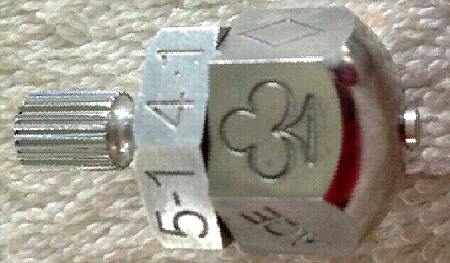
Modern top -- playing cards.
The seller
in the US (November 2013) says,
"This is
an old game with a new twist as well. .... The original
has the six horses names and the newer version has
the four playing card suits Spade-Diamond-Heart Club
as well as Joker and Ace.The odds are 2 to 1 4 to1
5 to1 6 to1 8 to 1 and Disqualified. ...
these are made of Aluminum. ... These are patent pending
games made in the U.S.A."
1-1/4,"
12 grams.
|
|
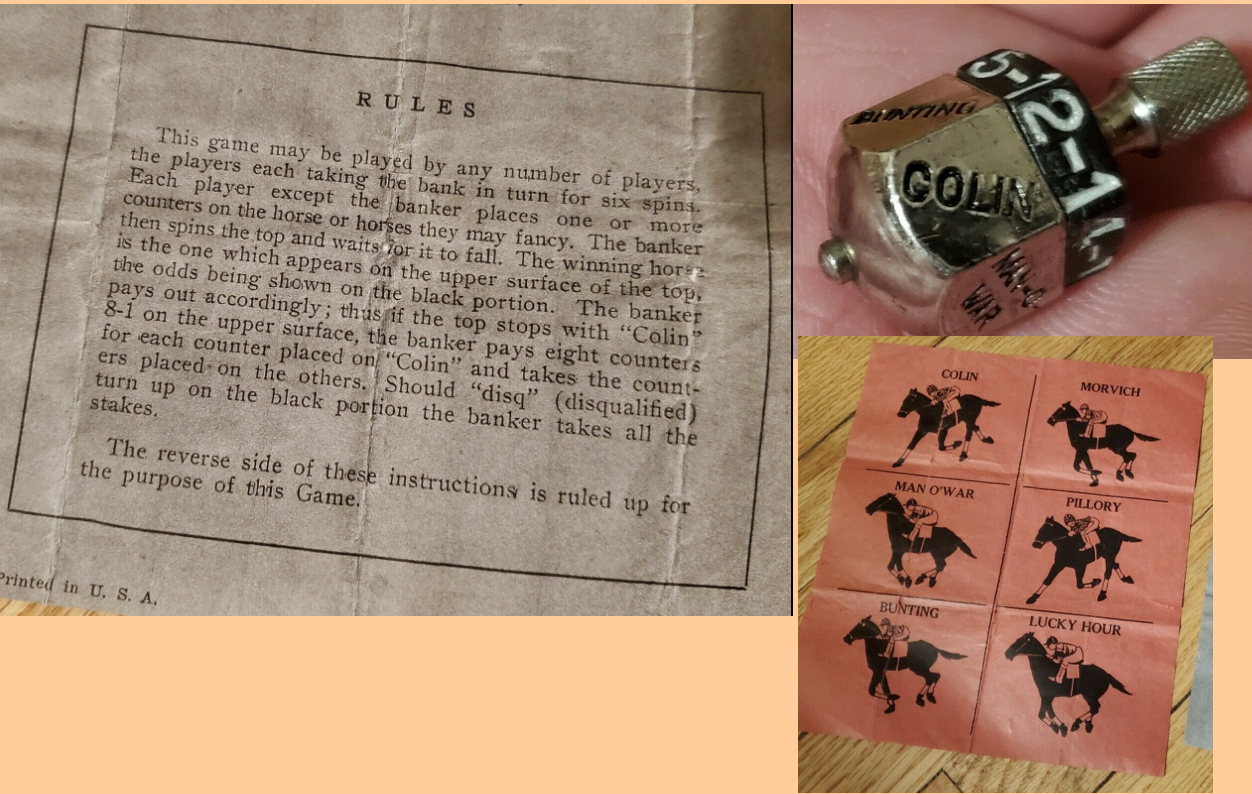
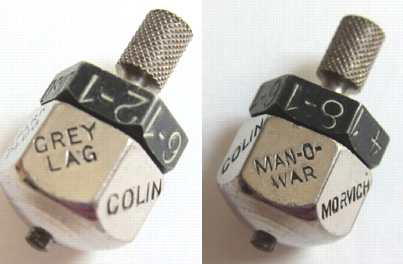
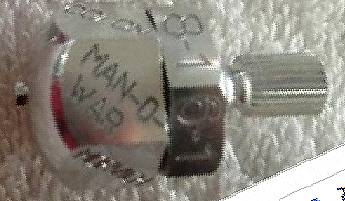
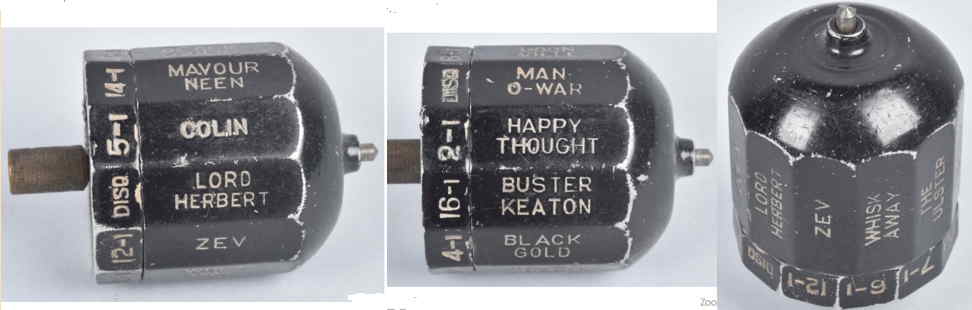
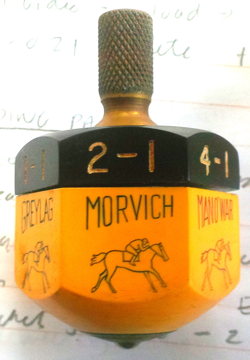
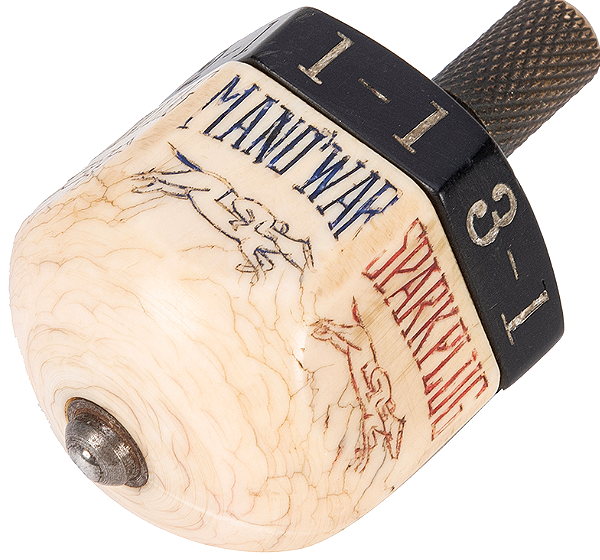
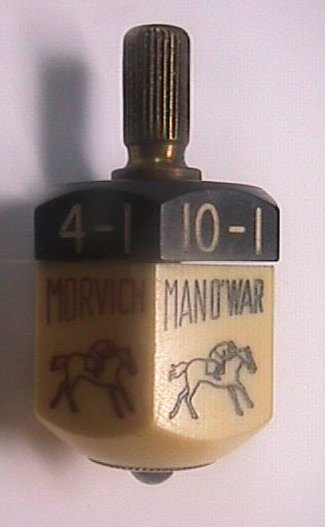
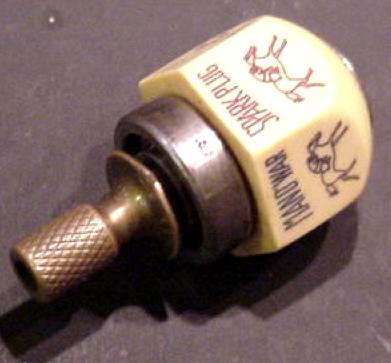
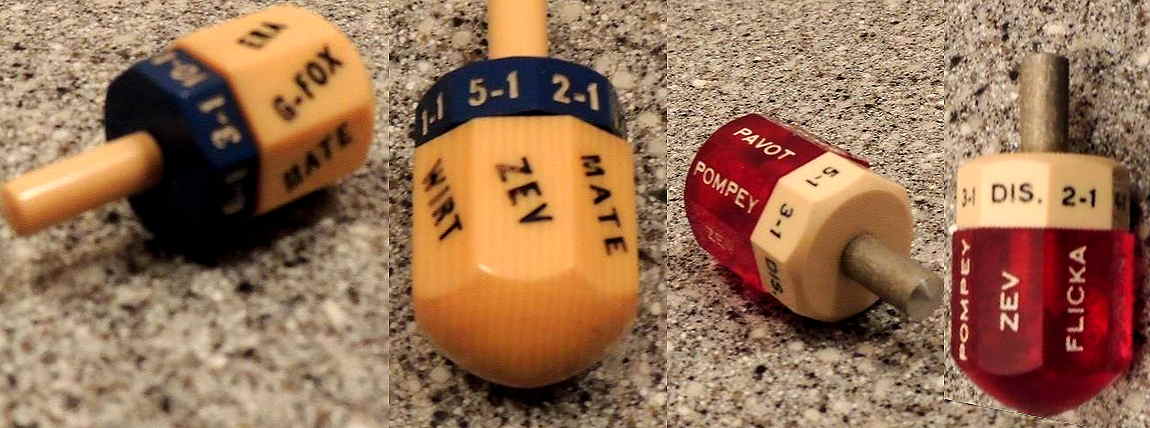
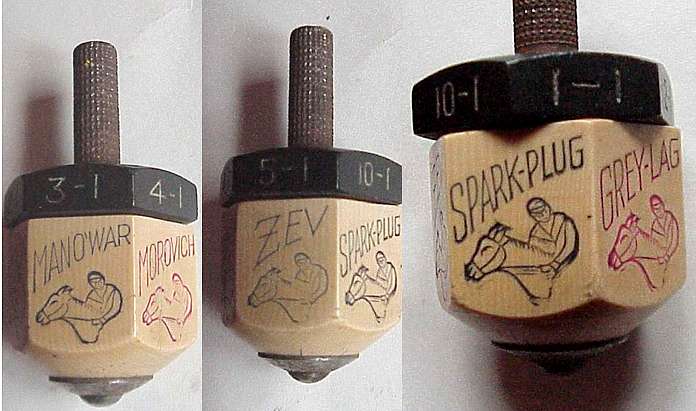
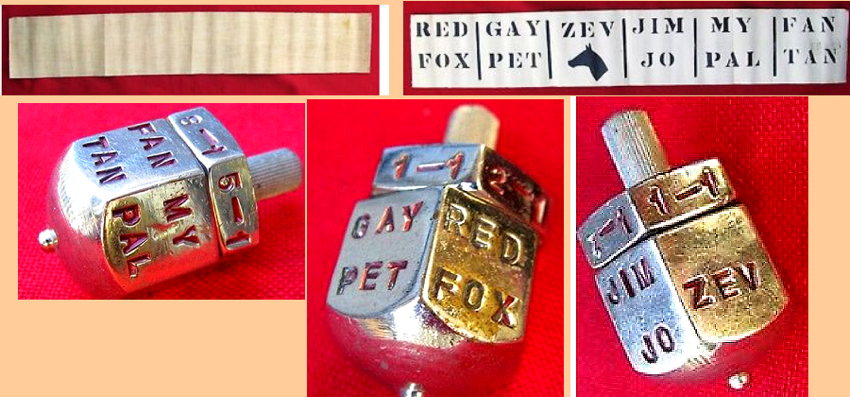
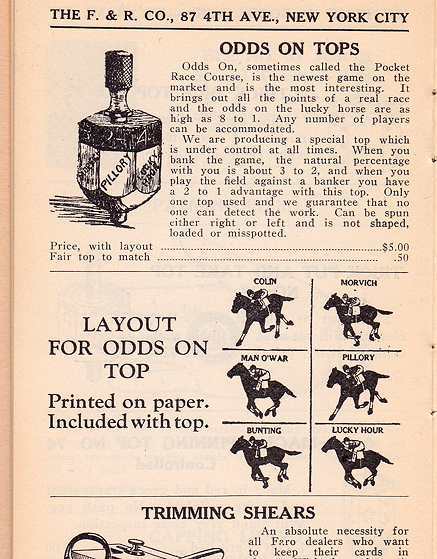
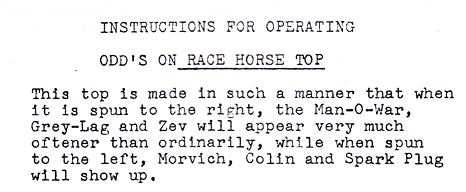
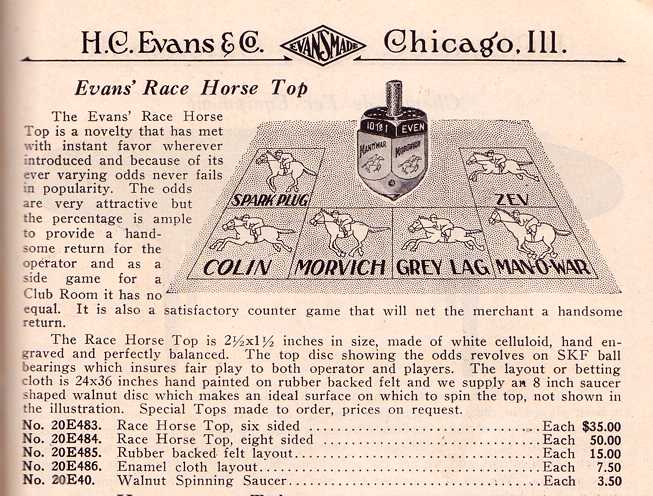
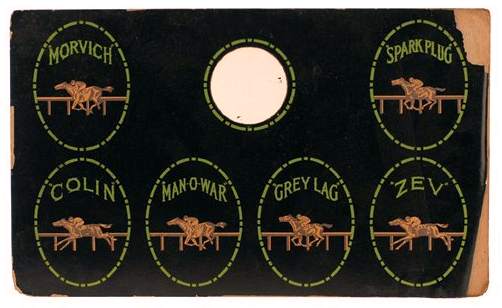
Modern top -- horse racing.
Similar
to the one above -- made by the same person, modern,
aluminum, 1-1/4," 12 grams.
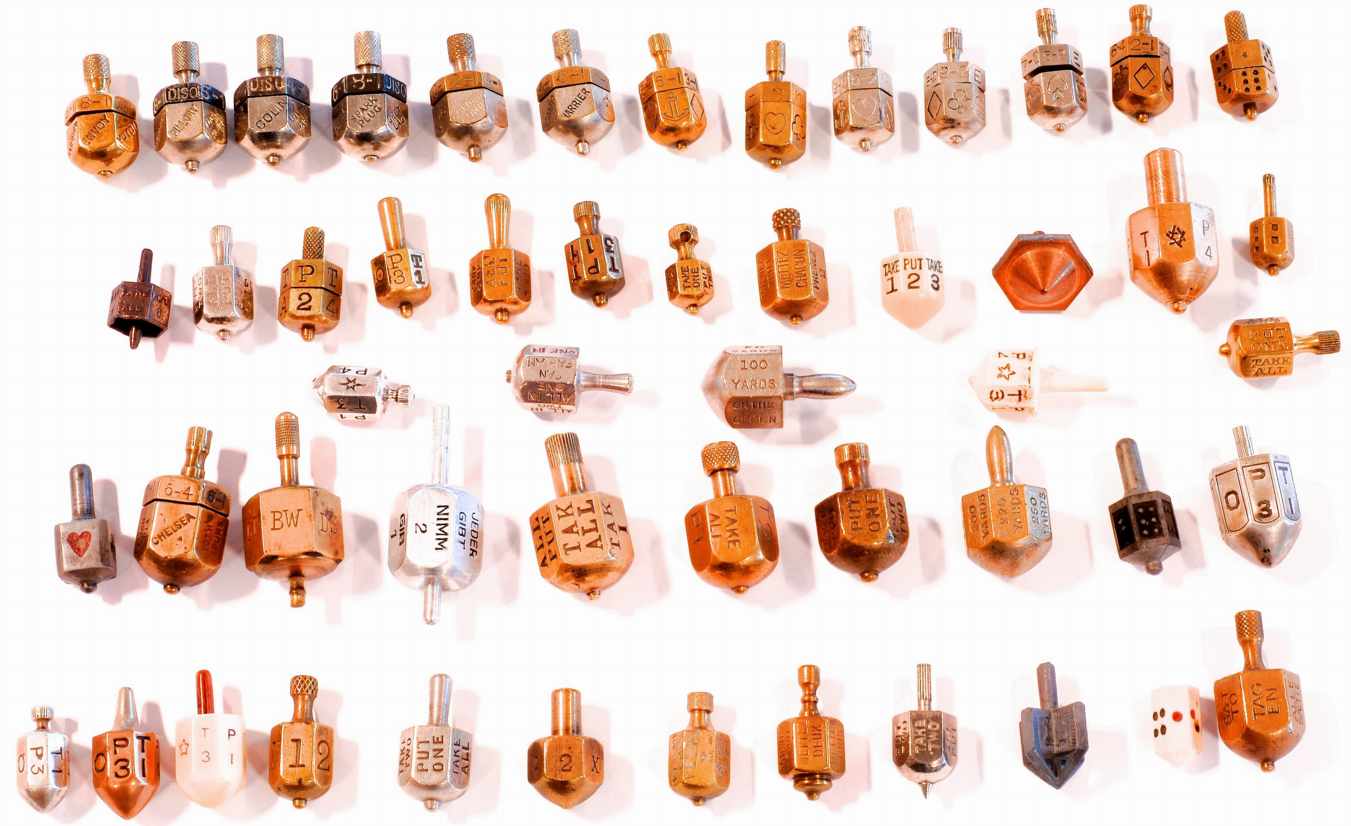
Same as
top #4 in the chart above, except one side is COLON,
not COLIN.
Grey
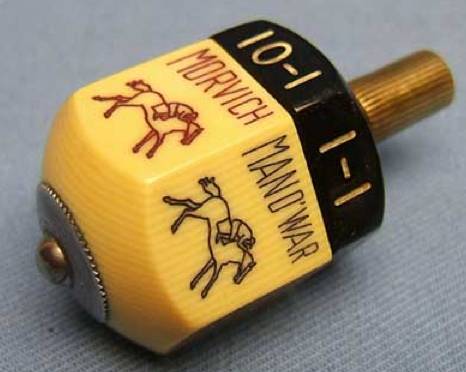
Lag-Colon--
Man-O-War--Morvich-
Zev-Spark Plug
DISQ, 5-1,
4-1,
8-1, 6-1, 2-1
|
|
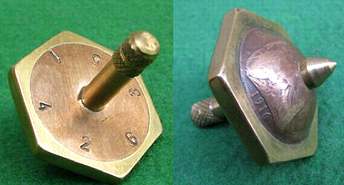
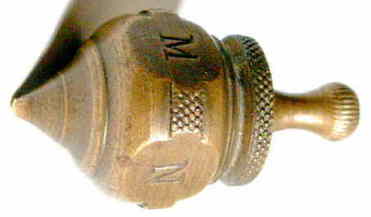
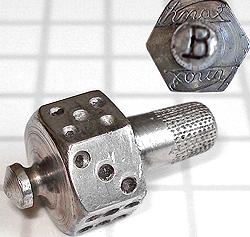
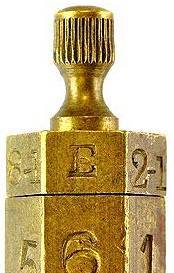
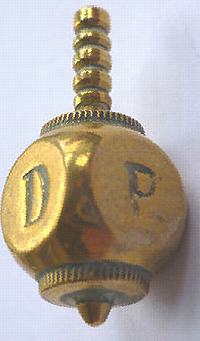
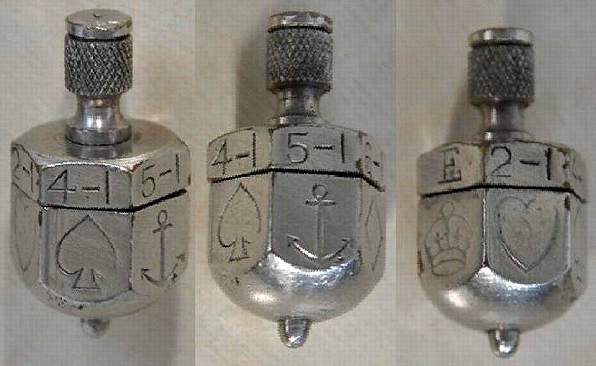
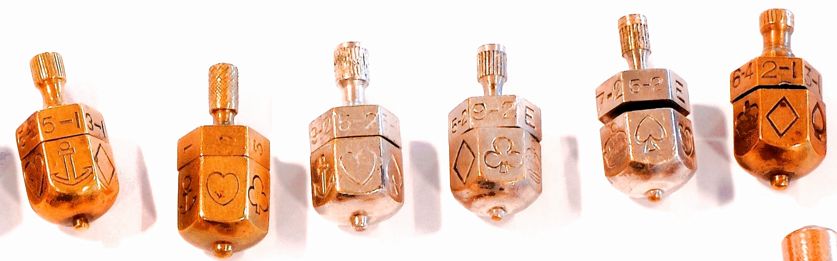
Crown and Anchor. Similar
to the bi-level tops (horses, poker) made by the company that made
the "Odds-On" tops, but nothing engraved on the top of the top near
the handle.
I won it at auction Aug 2014 for $65 plus postage.
Dealer in U.K. described it as, "Vintage 6 sided
Bi-level "Odds On" Spinner, Circa 1920s. ... The top level sides
are marked with the odds in this order: " E [Even], 2-1, 4-1, 5-1,
6-1, 8-1." The bottom level is marked with the symbols in this order:
crown, heart, spade, anchor, diamond, club.. ... Looks to be made of
brass with a silver coloured finish. ... Measures approx. 3cm tall.."
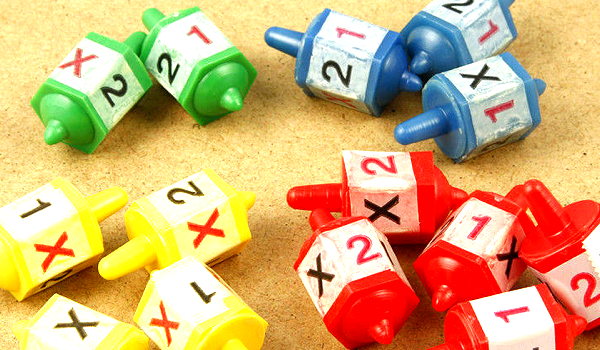
1-1/4", 30 grams.
|
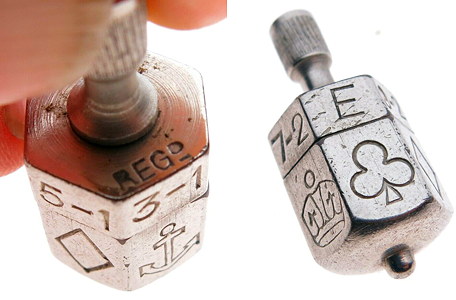 |
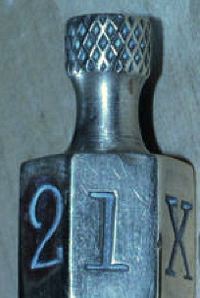
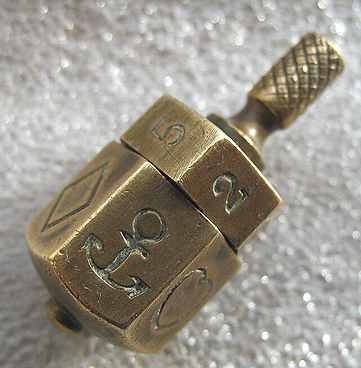
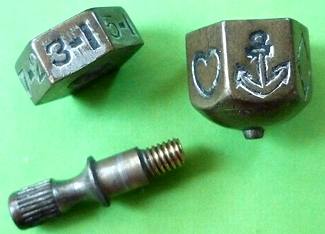
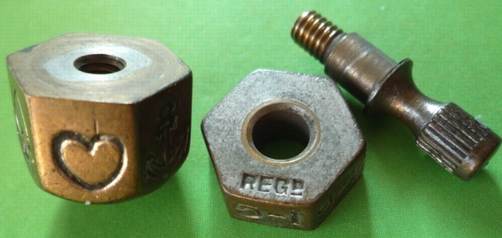
Crown and Anchor. Nickel-plated brass, 31.2 mm, spins well, REGd = registered.
Top (betting) spinner - E (even), 9-2, 5-2, 5-1, 3-1,7-2.
Lower level: Crown, Club, Diamond, Anchor, Heart, Spade.
|
|
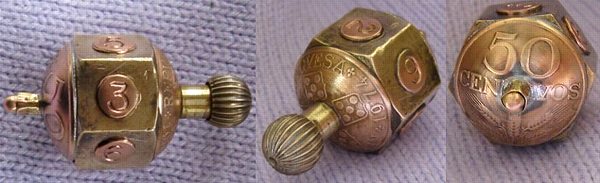
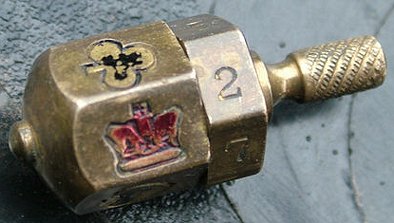
Crown and Anchor -- Color added. Nice
touch. Two other nice/unusual
features: (1) the upper level has single
numbers, not odds (like 5-1, 3-2,), and
(2) lovely spiral design on the finial (handle) (ususally
it is plain or has parallel lines or a
diamond design).
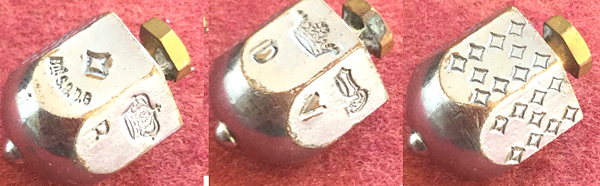
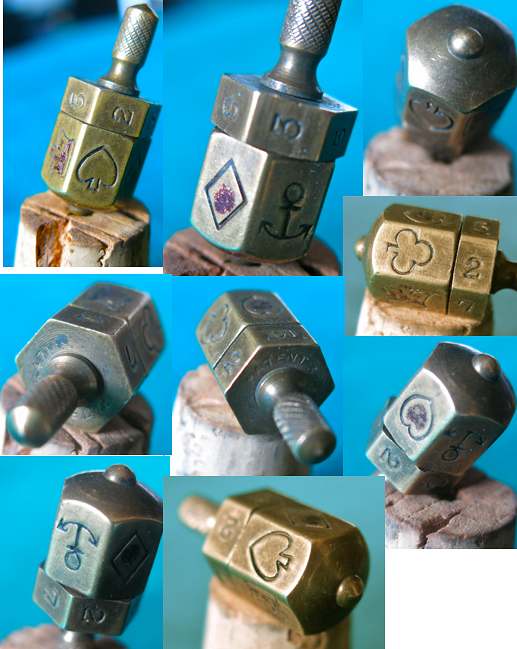
I sold a similar one on eBay in July 2013 for $90.
The sale was helped with this neat composite
picture of many angles of the
spinner. Near the handle, the patent
number 33471 is engraved.
|
|
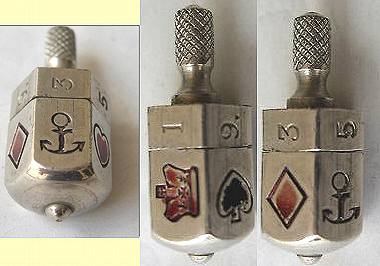
Crown and Anchor --
Color added. Another one.
|
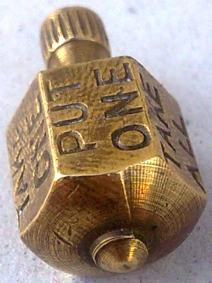
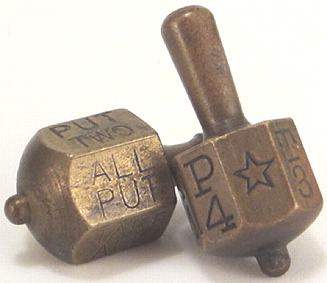

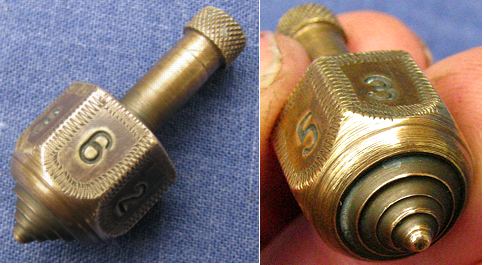
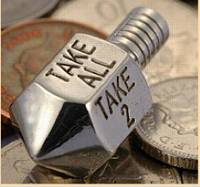
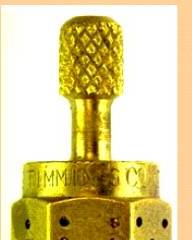
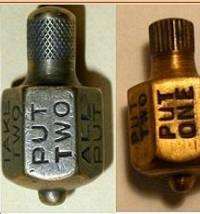
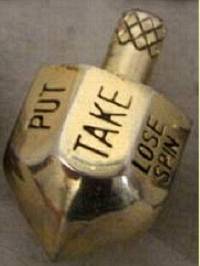
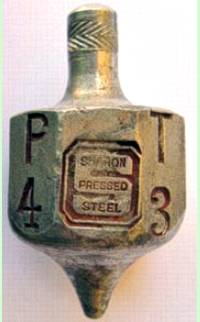
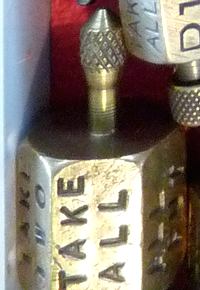
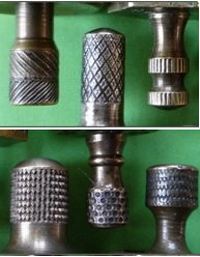
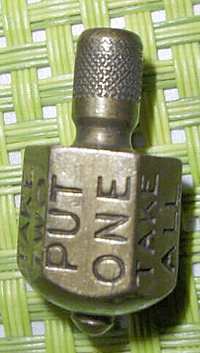
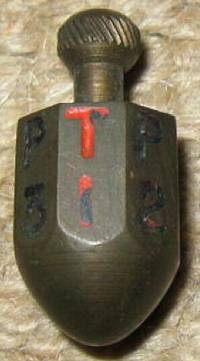
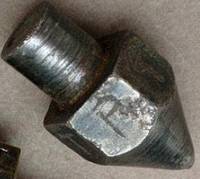
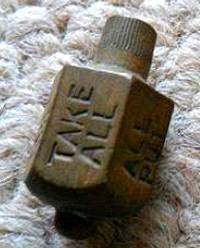
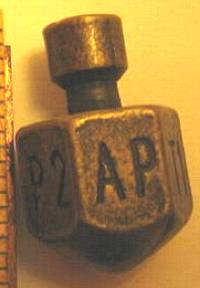
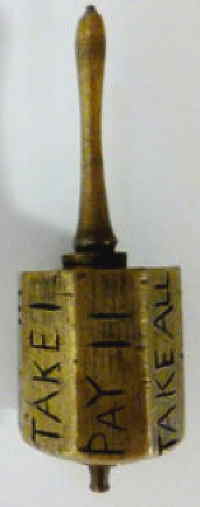
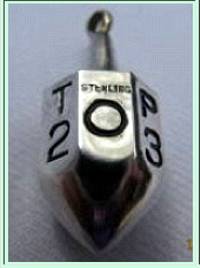
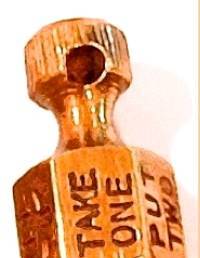
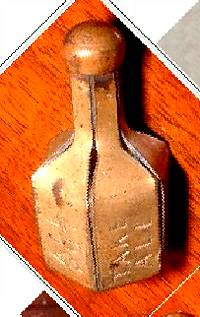
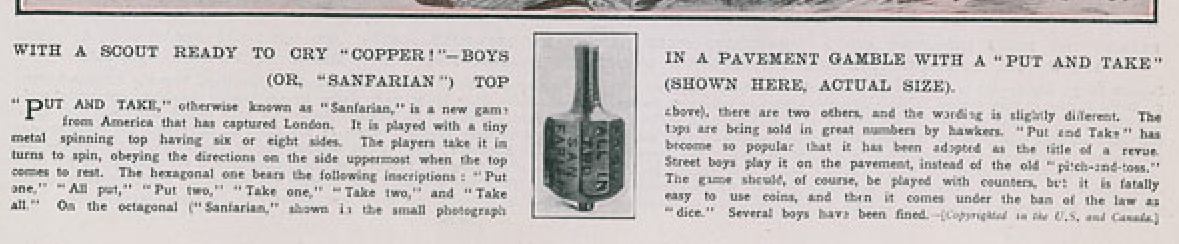
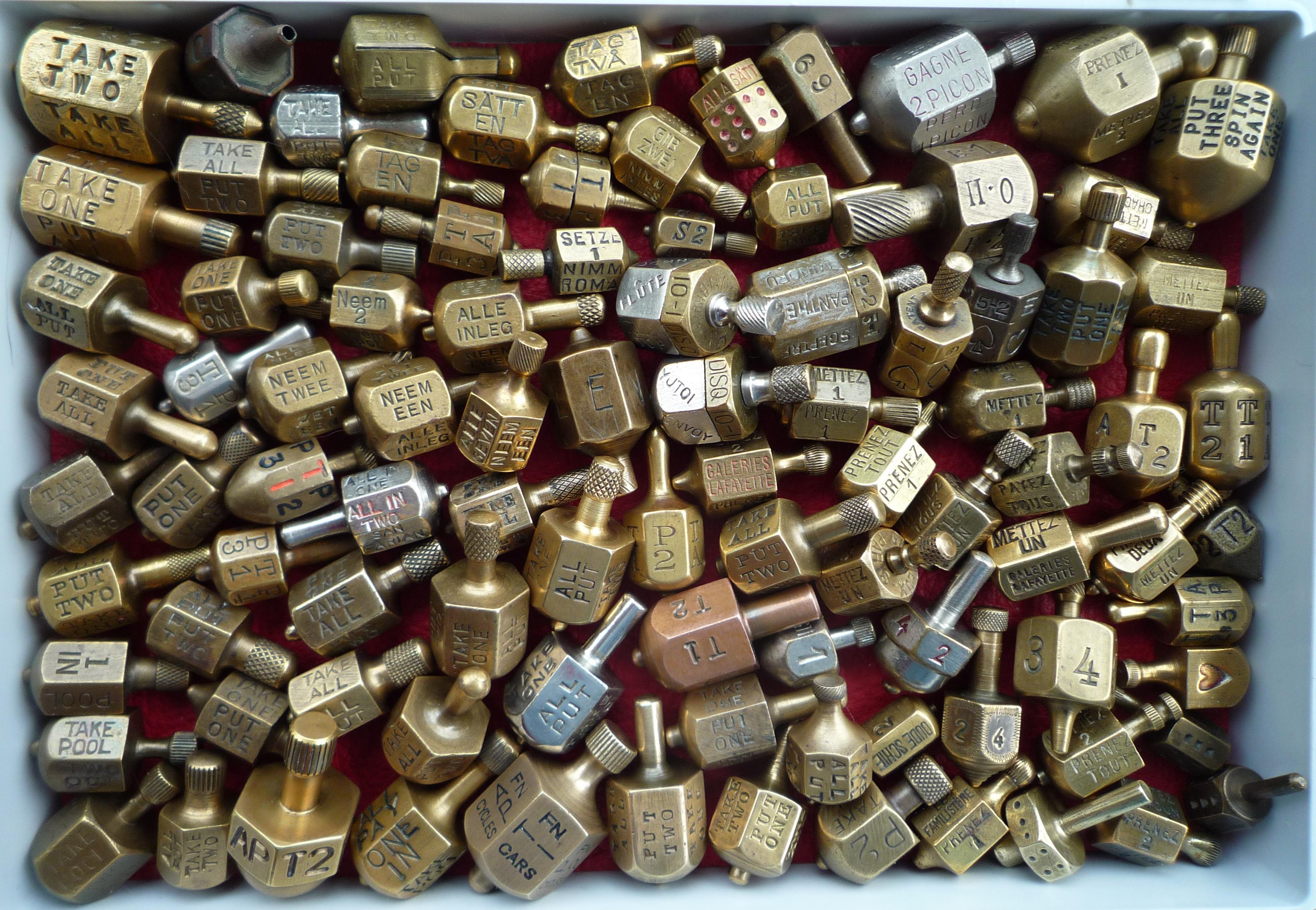
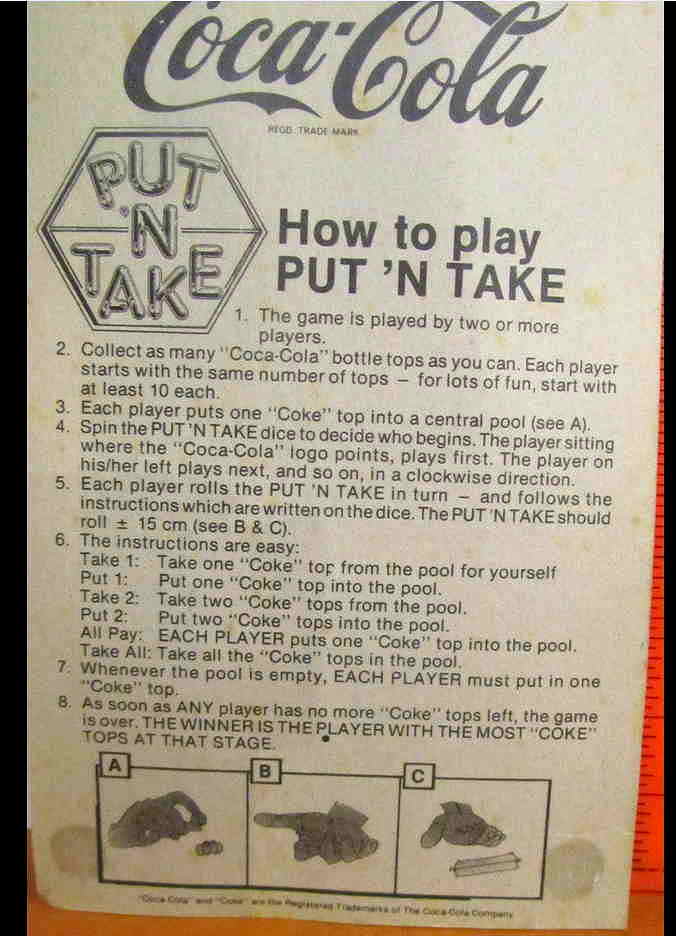
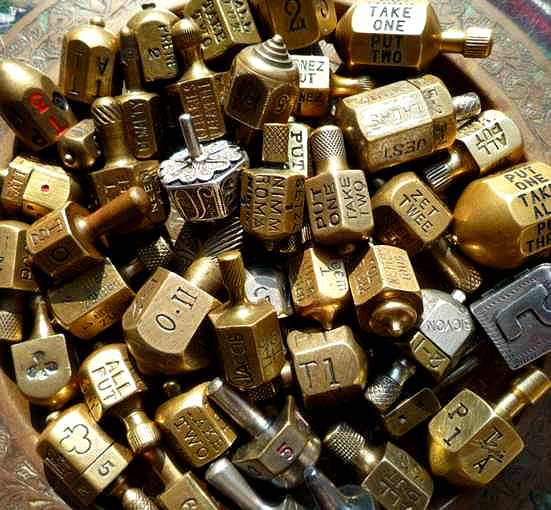
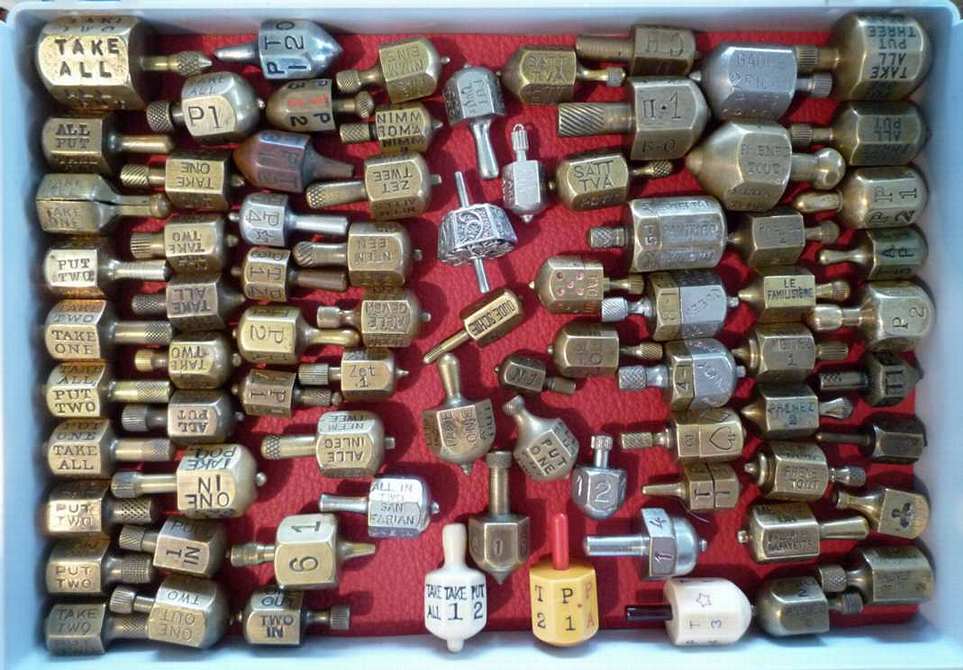
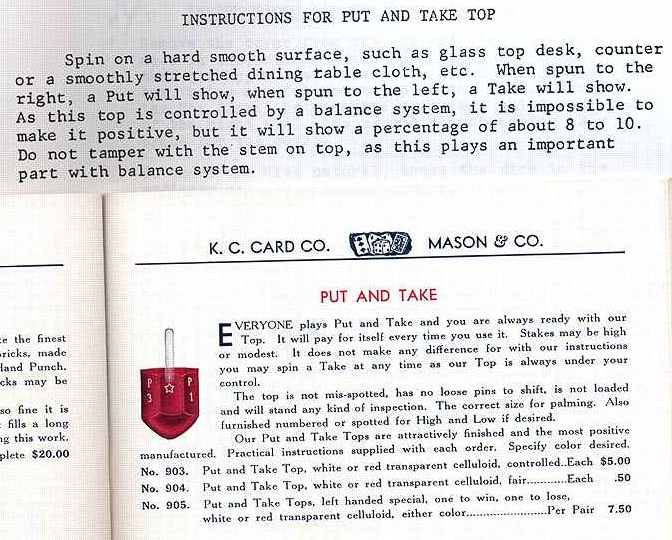
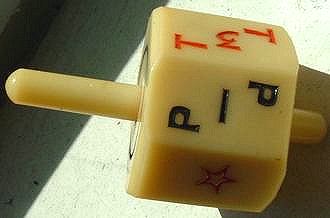
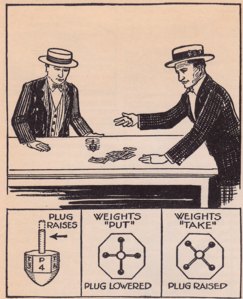
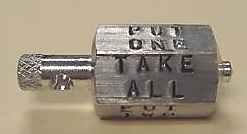
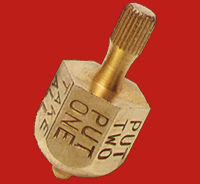
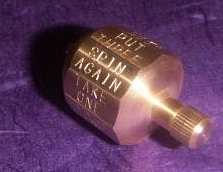
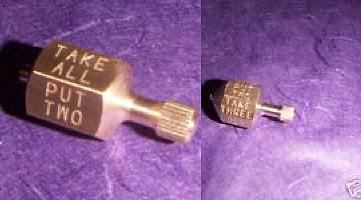
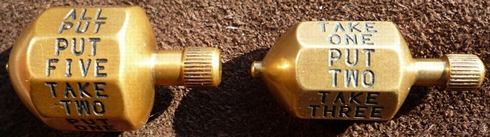
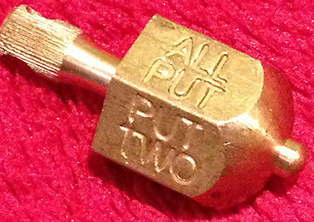
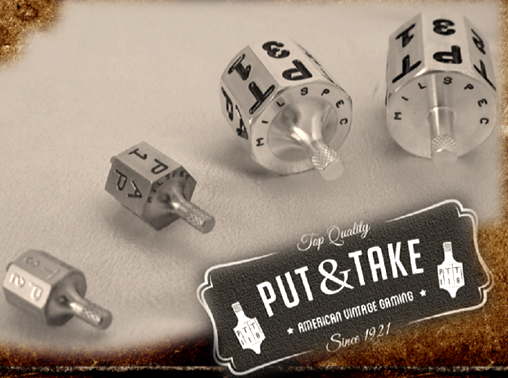
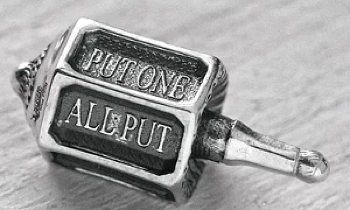
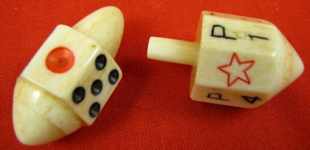
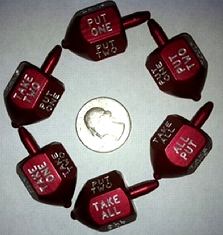
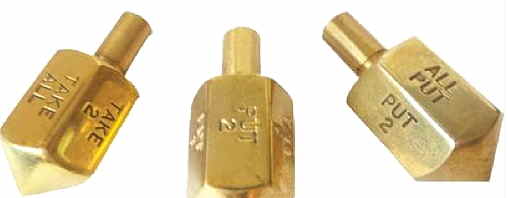
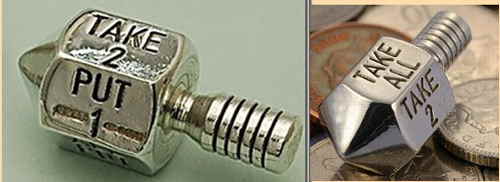
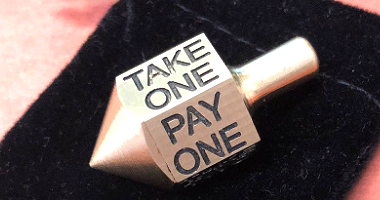
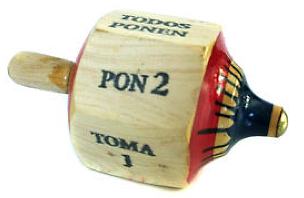
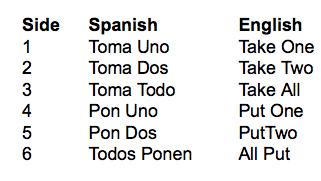
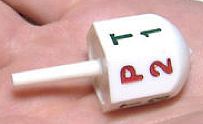
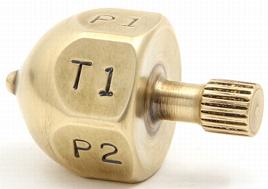
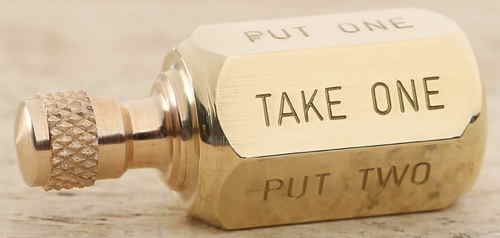
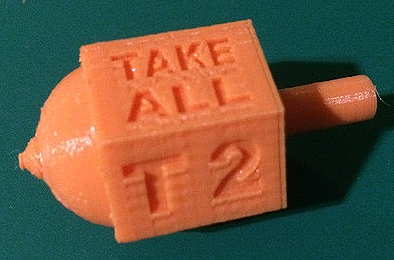
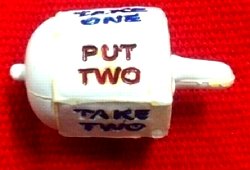
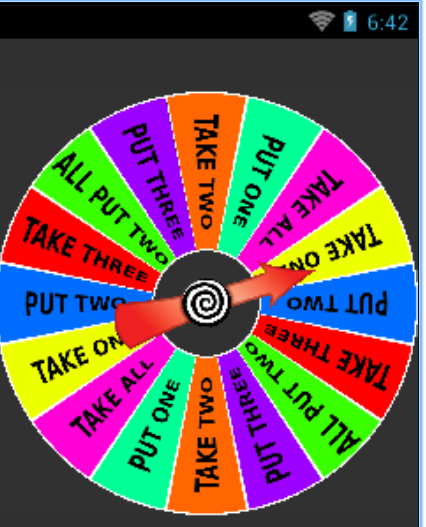
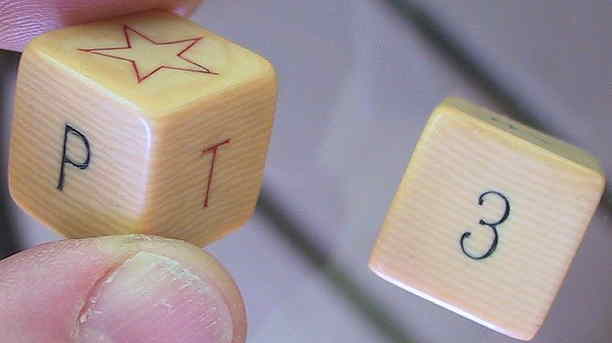
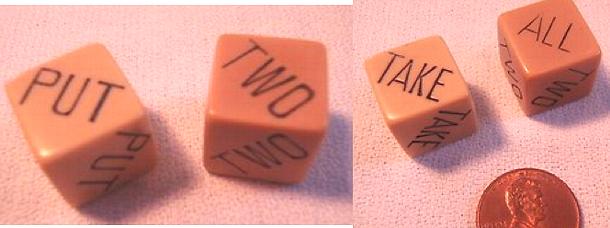
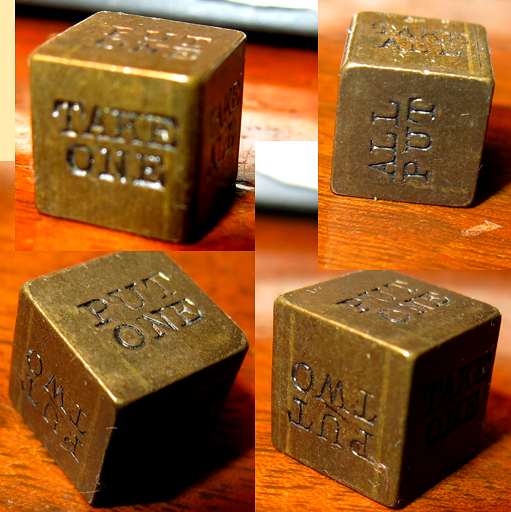
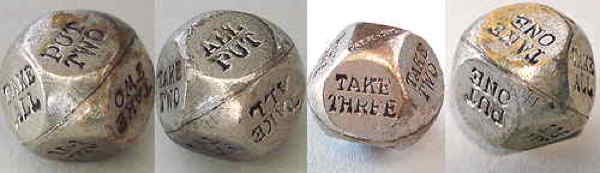
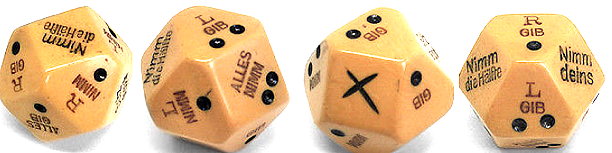
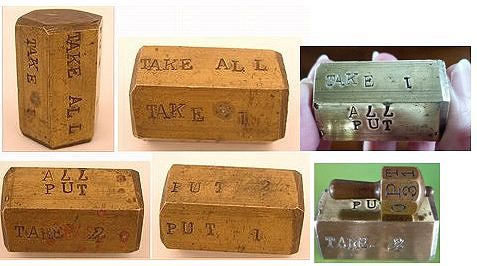
 6-sided tops, like the one at the left,
are much more common than 8-sided
ones. The commands on the six sides
are usually in words. And to
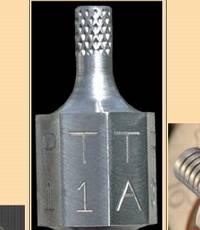
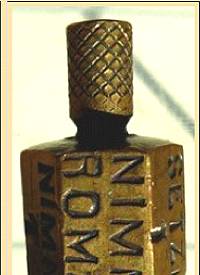
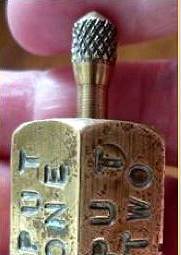
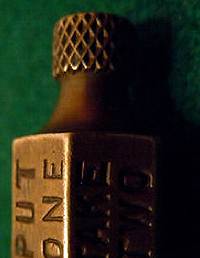
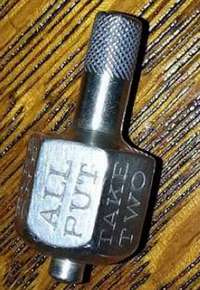
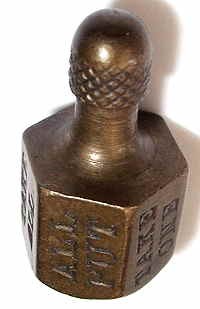
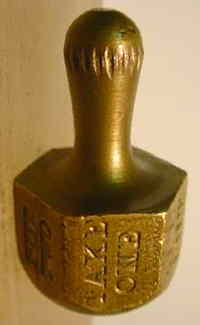
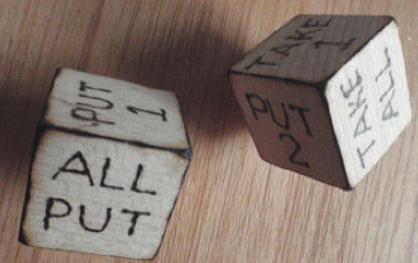
read the words, you hold the top sideways. The
commands are usually: take all, all put, take
two, put one, take one, and put two.
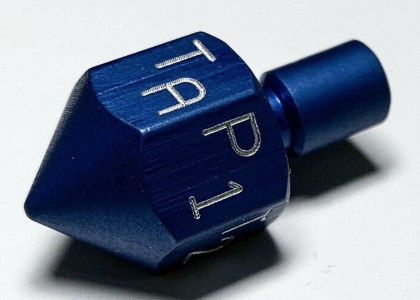
6-sided tops, like the one at the left,
are much more common than 8-sided
ones. The commands on the six sides
are usually in words. And to
read the words, you hold the top sideways. The
commands are usually: take all, all put, take
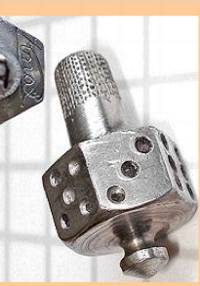
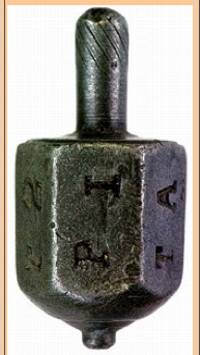
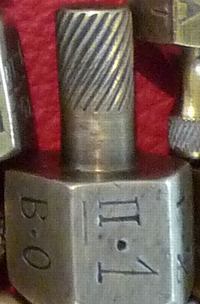
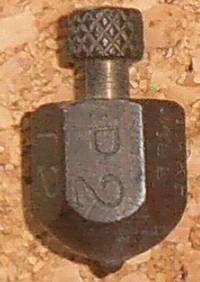
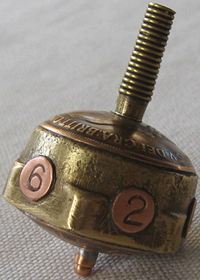
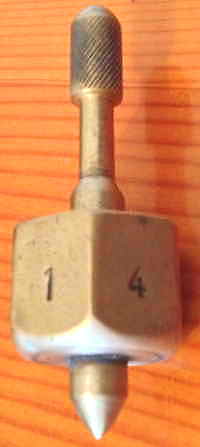
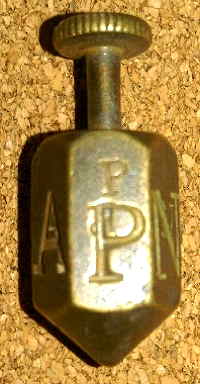
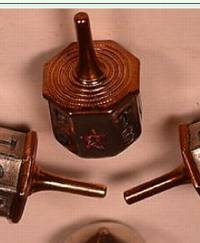
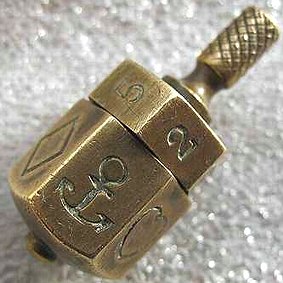
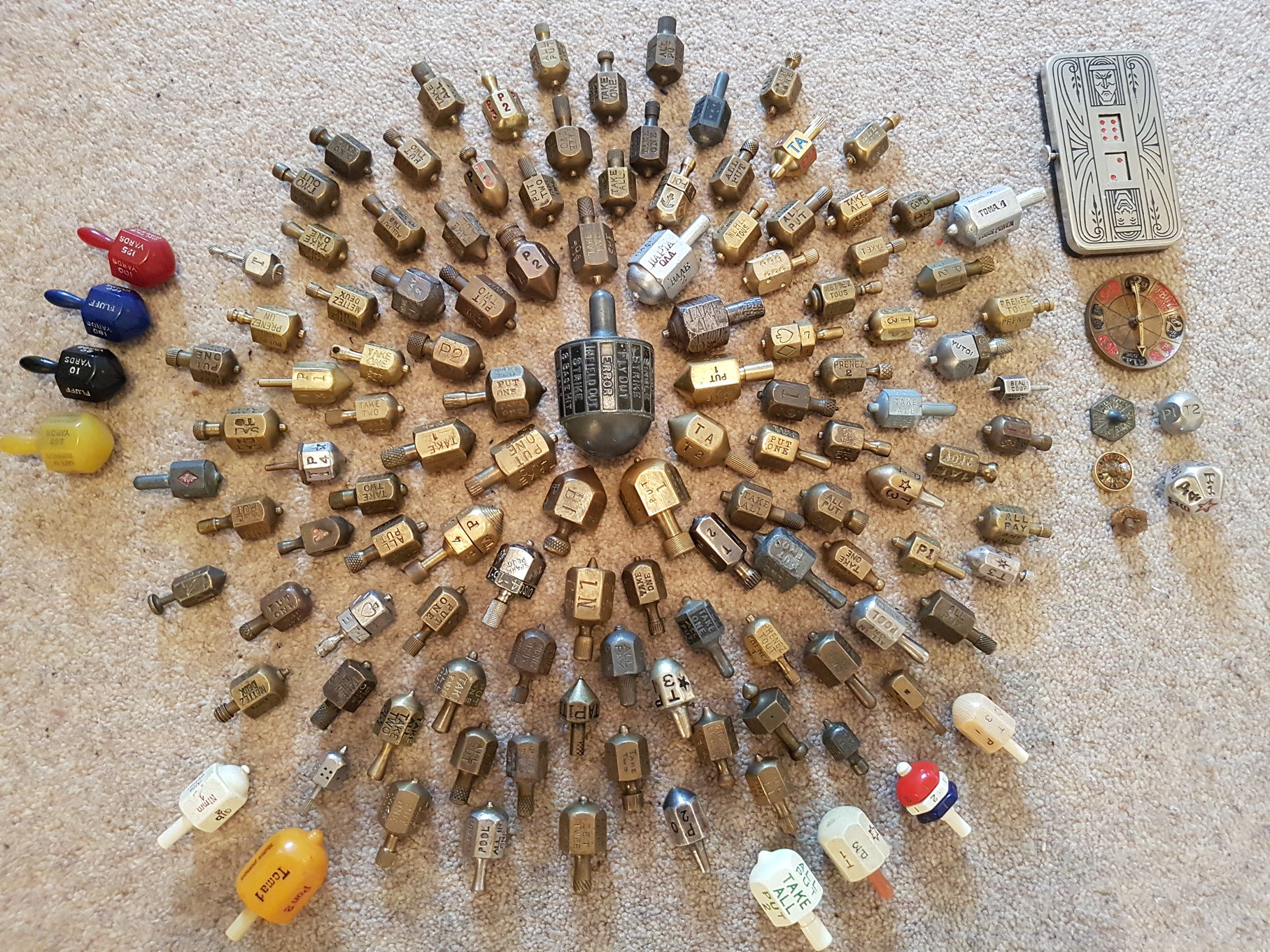
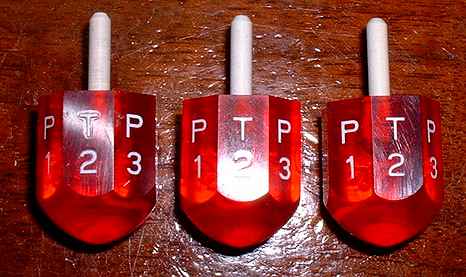
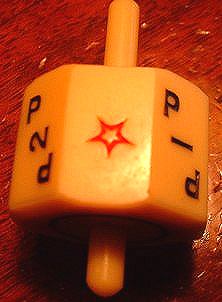
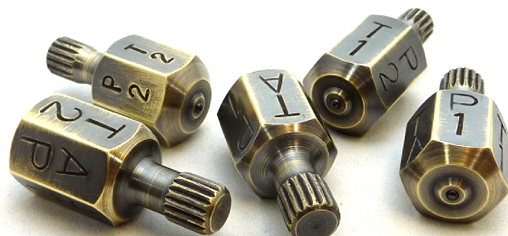
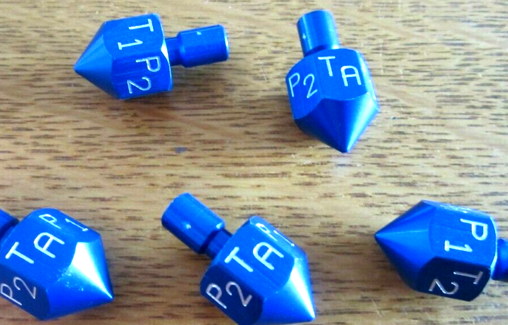
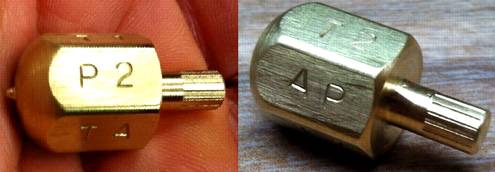
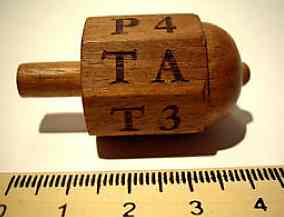
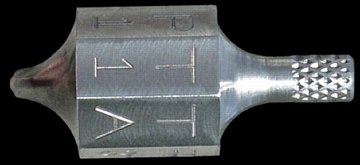
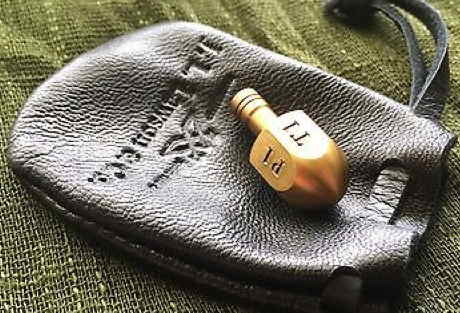
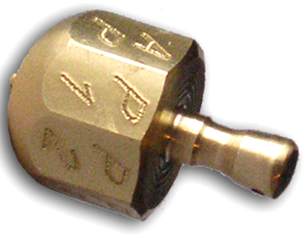
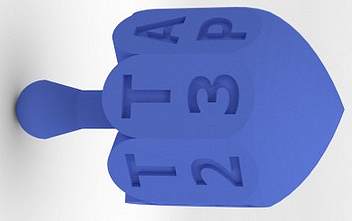
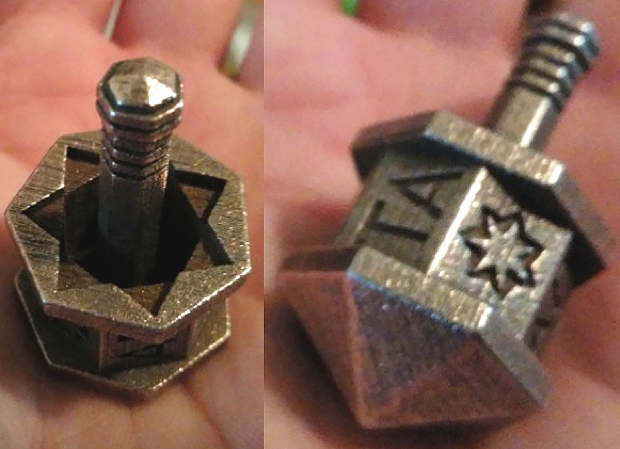
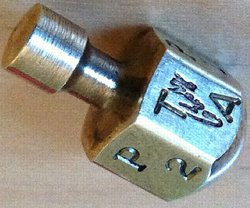
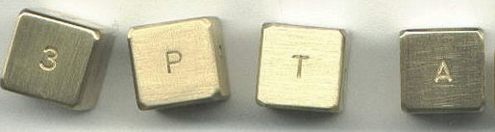
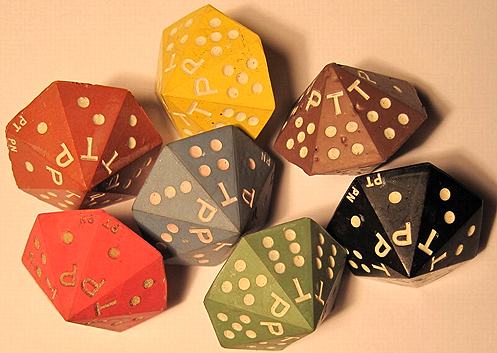
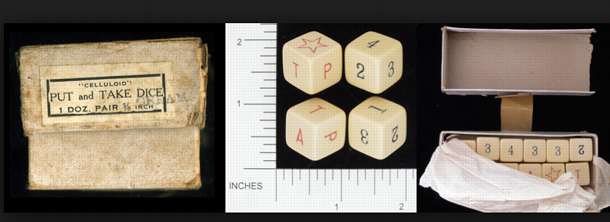
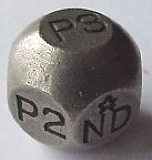
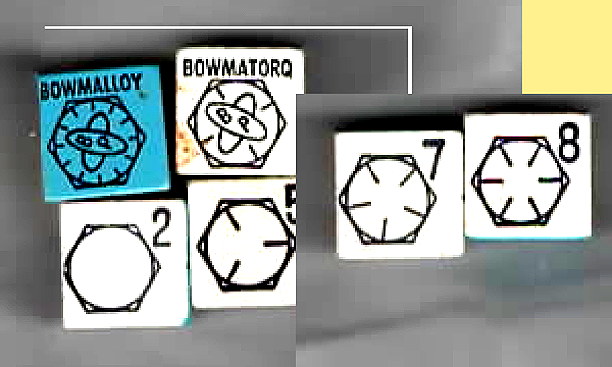
two, put one, take one, and put two.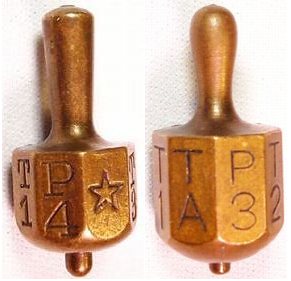 8-sided tops, like the two typical ones on
the left, have smaller sides than
the 6-sided ones so the commands are in
single letters, numerals, and symbols such as
stars (*) and zeros (0). To read them, you hold
the top upright.
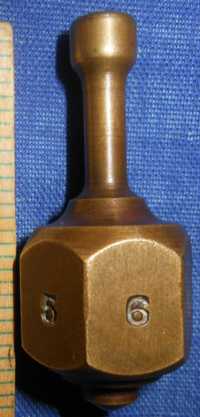
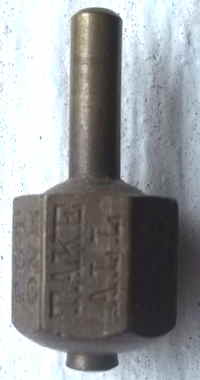
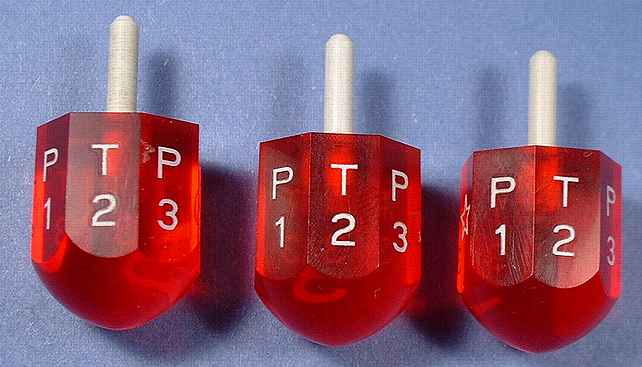
8-sided tops, like the two typical ones on
the left, have smaller sides than
the 6-sided ones so the commands are in
single letters, numerals, and symbols such as
stars (*) and zeros (0). To read them, you hold
the top upright.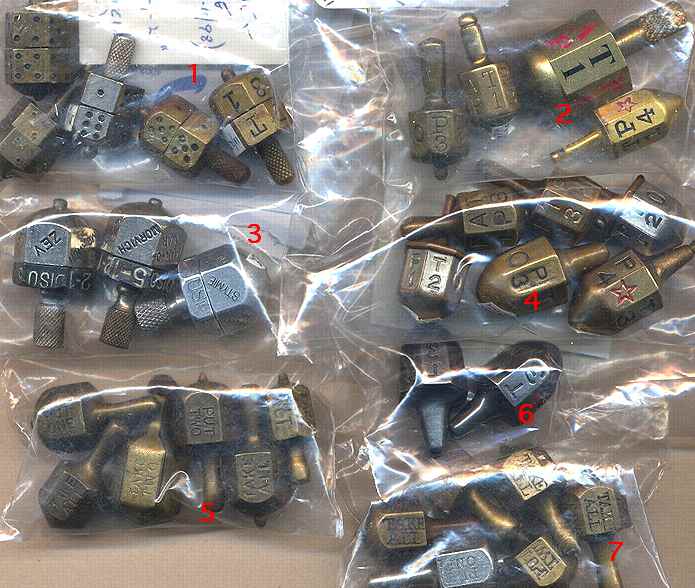
 508 pixels column

 612 pixel column
 620 pixel colimn
 412 pixel col.
 600 pixel column